

Travelers seeking an escape from the frantic pace of modern life often look toward destinations that preserve their natural environments and traditional ways of living. On the northern coast of the island of Borneo, the sovereign state of Brunei Darussalam offers a distinct blend of quiet green landscapes, ornate places of worship, and centuries-old river communities. Situated along the Brunei River, the capital city serves as the cultural heart of the nation and provides an easy entry point into a country where old traditions remain firmly intact.
The Cultural and Urban Center of Bandar Seri Begawan
The urban area of Bandar Seri Begawan acts as the main focal point for visitors arriving in the country. Official tourism documentation notes that Bandar Seri Begawan is located directly on the Brunei River, functioning as the primary urban and commercial hub for the population according to details shared by Brunei Tourism. Visitors walking through the clean streets notice an unhurried atmosphere that contrasts sharply with the large mega-cities found elsewhere in Southeast Asia.
Public parks, quiet waterfront promenades, and low-rise government buildings define the town center. Local markets offer an array of fresh produce and traditional snacks, giving travelers a direct look at daily life. Unlike neighboring capitals that have surrendered completely to high-rise development, Bandar Seri Begawan maintains a human scale. Traditional coffee shops sit alongside modern commercial outlets, allowing visitors to observe local residents reading newspapers or catching up over local tea.
Magnificent Islamic Architecture Across the Capital
Religious architecture stands out as one of the most prominent visual elements of Brunei. The skyline features grand domes covered in real gold leaf, detailed marble work, and carefully tended gardens that reflect deep religious devotion and skilled craftsmanship.
Sultan Omar Ali Saifuddien Mosque
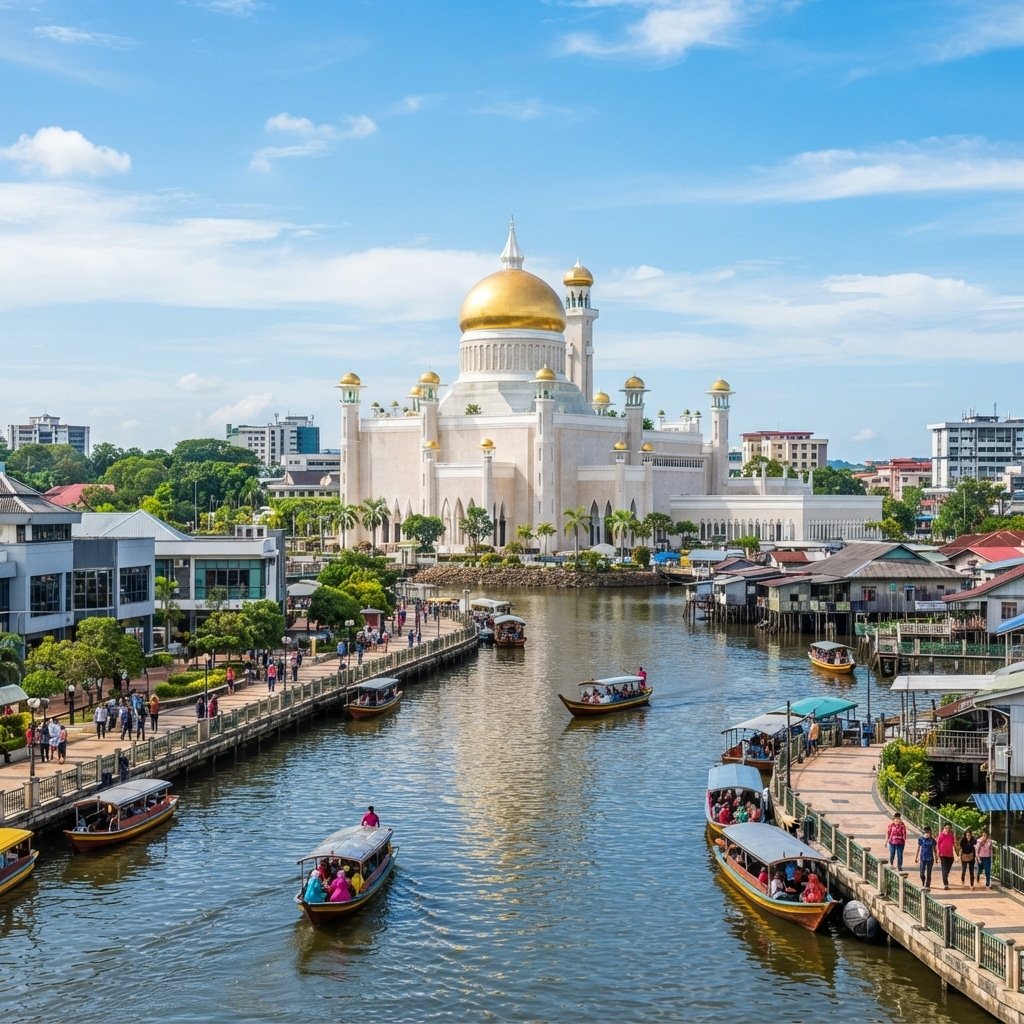
Completed in 1958, the Sultan Omar Ali Saifuddien Mosque rests beside the Brunei River in an artificial lagoon that mirrors its white marble exterior and main golden dome. Historical program notes from the Ministry of Defence document this completion year and highlight its position as a major architectural landmark for the country, as outlined by the Mindef Government portal. A long marble bridge connects the structure to a replica of a 16th-century royal ceremonial barge resting in the lagoon. The interior features Italian marble, British carpets, and chandeliers imported from crystal makers in Europe. Visitors can walk around the surrounding water gardens during late afternoon when the setting sun illuminates the golden domes against the tropical sky.
Jame Asr Hassanil Bolkiah Mosque
Another major architectural achievement is the Jame Asr Hassanil Bolkiah Mosque, which opened to the public in 1994. This massive complex features multiple golden domes, elaborate tile mosaics, and expansive manicured grounds that welcome visitors seeking to admire contemporary Islamic design. Architectural overviews note that the complex was built to honor the current reigning monarch and serves as a major community gathering space for major religious holidays and daily prayers. The surrounding courtyards include fountains and manicured lawns that create a calm space for reflection.
Balai Khazanah Islam Sultan Haji Hassanal Bolkiah
For those interested in historical texts and religious artifacts, the Balai Khazanah Islam Sultan Haji Hassanal Bolkiah houses an extensive collection of manuscripts, historical Qurans, and cultural relics. Originally inaugurated on August 18, 2001, with its permanent facility opening on October 12, 2019, this institution preserves rare documents and scientific instruments from various periods of Islamic history according to background details from the Balai Khazanah Islam Sultan Haji Hassanal Bolkiah administration. Scholars and curious travelers spend hours browsing exhibition halls dedicated to Islamic astronomy, medicine, and calligraphy.
Kampong Ayer The Historic Water Village
Just across the water from the modern downtown area lies Kampong Ayer, a centuries-old settlement built entirely on stilts over the Brunei River. Often referred to in official government material as the world’s largest water village, this aquatic neighborhood houses thousands of residents who commute daily via wooden water taxis known locally as tambang.
Historical records and government briefs, such as those maintained by the Brunei Government Information Department, indicate that the community accommodates a population ranging from 25,000 to over 30,000 inhabitants depending on census periods. The settlement features a complex network of interconnected wooden walkways stretching for miles, linking houses, schools, mosques, clinics, and local shops.
Walking through Kampong Ayer reveals a self-sustaining community where children play on wooden porches and neighbors chat across narrow boardwalks. Modern amenities like electricity, running water, and internet cables run underneath the walkways, blending traditional stilt-house living with contemporary convenience. To support preservation efforts and educate visitors, the Kampong Ayer Cultural and Tourism Gallery officially opened its doors on August 19, 2009. The facility, documented by the Tourism Development Department, displays traditional village industries, local handicrafts, and historical artifacts that explain how generations of families adapted to river life.
Preserving Traditional Arts and Handicrafts
Cultural preservation extends far beyond architecture and water settlements. The government and local artisans work continuously to maintain traditional crafts that have been passed down through generations. Woven textiles, detailed metalwork, and the crafting of the traditional male headgear known as the songkok remain important components of the local identity.
The Brunei Arts and Handicrafts Training Centre, established back in 1975, trains young artisans in silver smithing, basketry, and traditional weaving patterns. Visitors can watch students work on looms, producing fabric interwoven with real gold and silver threads. These textiles are often worn during royal ceremonies, weddings, and national celebrations, serving as wearable pieces of history.
Ulu Temburong National Park Pristine Rainforests
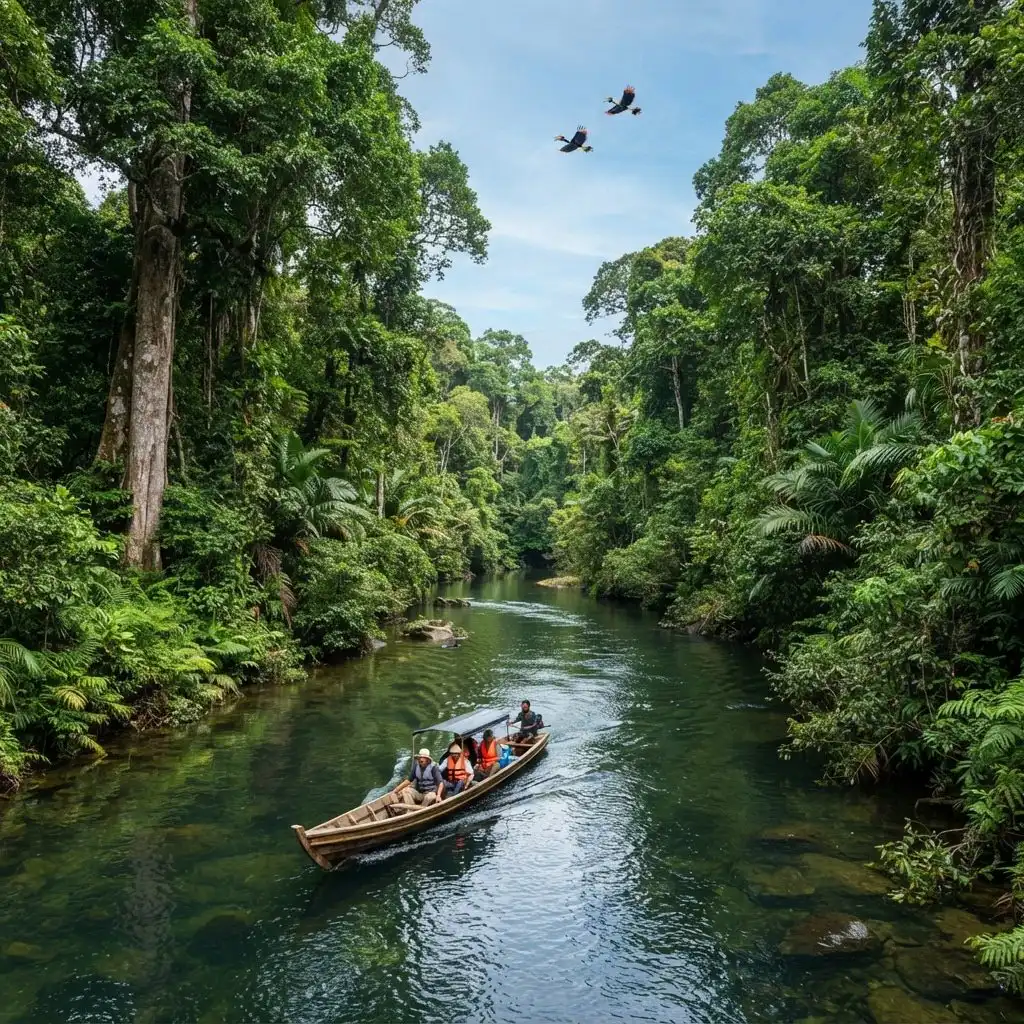
Travelers looking to step away from urban life can take a short boat ride east to the Temburong District, home to Ulu Temburong National Park. Spanning approximately 50,000 hectares of protected lowland and mountain rainforest, this park represents one of the most successful conservation areas on the island of Borneo.
Official tourism guides note that the park protects a dense environment featuring pristine rainforests, clear rivers, and diverse wildlife populations. Visitors taking longboat trips up the narrow rapids often spot hornbills flying overhead, long-tailed macaques playing in the riverbank trees, and occasionally hear the calls of wild gibbons echoing through the canopy.
The main highlight for active travelers is the canopy walkway, which rises high above the jungle floor. Steel towers anchored to giant hardwood trees support a series of suspended bridges that allow visitors to stand above the misty treetops. Climbing the walkway at dawn offers a quiet view of the sun breaking through the jungle mist, illuminating miles of unbroken green canopy stretching toward the horizon.
Eco-tourism initiatives in the park emphasize low-impact travel. Local guides from nearby communities lead treks along well-marked forest trails, sharing knowledge of medicinal plants, edible jungle fruits, and tracking techniques used by indigenous populations. These community-led tours ensure that tourism revenue directly benefits local families while protecting the fragile rainforest habitat from overdevelopment.
Culinary Traditions and Local Flavors
Exploring the culinary scene provides another layer of cultural immersion. Bruneian cuisine shares similarities with Malaysian and Indonesian flavors, featuring fresh seafood, aromatic spices, and coconut milk, yet it retains distinct local specialties.
The most famous national dish is ambuyat, a sticky, starchy food made from the interior trunk of the sago palm. Diners use a split bamboo fork called a chandas to twist a lump of the warm starch and dip it into a flavorful, sour-and-spicy fruit sauce called cacah. Accompanied by side dishes of fried fish, local greens, and sambal, eating ambuyat is a communal dining experience meant to be shared with family and friends.
Night markets across the districts offer skewers of grilled chicken, beef satay, sweet rice cakes, and fresh tropical fruits like rambutan, mangosteen, and durian. Vendors greet visitors with quiet hospitality, making food exploration an easy and welcoming experience for foreign travelers.
Practical Tips for Visiting Brunei
Planning a trip to this peaceful Southeast Asian nation requires some basic preparation regarding local customs, weather, and transportation.
- Dress Modestly: When visiting mosques, government buildings, and local villages, both men and women should wear clothing that covers their shoulders and knees. Women are typically provided with black robes and headscarves when entering major mosques.
- Respect Local Laws: The nation follows strict legal codes regarding alcohol sales and public behavior. Alcohol is not sold publicly anywhere in the country, though non-Muslim visitors are permitted to bring a limited personal allowance into the country for private consumption.
- Transportation: Water taxis are the best way to travel around Kampong Ayer, while metered taxis and ride-hailing apps operate throughout Bandar Seri Begawan. Renting a car is also popular for visitors wanting to explore the rural districts and Temburong park connections.
- Climate: Expect a tropical climate with warm temperatures year-round and occasional heavy tropical downpours. Packing lightweight, breathable fabrics and rain gear ensures comfort during outdoor excursions.
Conclusion
A trip through Brunei offers a rare glimpse into a destination that balances quiet modernization with deep-rooted tradition. From the gold-plated domes rising above Bandar Seri Begawan and the active boardwalks of Kampong Ayer to the silent forest canopy of Ulu Temburong National Park, the country presents a refreshing alternative for travelers seeking serenity, architectural splendor, and authentic cultural heritage.
What is the capital of Brunei?
The capital of Brunei is Bandar Seri Begawan, located along the banks of the Brunei River. It serves as the country’s primary cultural, commercial, and administrative center, featuring major landmarks like the Sultan Omar Ali Saifuddien Mosque and waterfront markets.
When was the Sultan Omar Ali Saifuddien Mosque completed?
The Sultan Omar Ali Saifuddien Mosque was completed in 1958. Built on an artificial lagoon beside the Brunei River, it is celebrated for its white marble architecture and main dome covered in real gold leaf.
What is Kampong Ayer known for?
Kampong Ayer is a centuries-old settlement built entirely on stilts over the Brunei River. Recognized in government records as a massive water village, it houses thousands of residents connected by miles of wooden walkways and serviced by water taxis.
How large is Ulu Temburong National Park?
Ulu Temburong National Park covers approximately 50,000 hectares in the Temburong District. It protects untouched lowland and mountain rainforests, offering canopy walkways, longboat river excursions, and diverse wildlife habitats.
What is ambuyat?
Ambuyat is Brunei’s national dish, made from the starchy interior trunk of the sago palm. Served hot and sticky, it is traditionally eaten using a split bamboo fork called a chandas and dipped into a tangy fruit-based sauce called cacah.
Planning Your Itinerary
Designing a balanced travel plan helps manage your time between urban sites and natural escapes. Most international visitors fly into Brunei International Airport and head straight to Bandar Seri Begawan. Spending your first two days exploring the capital allows you to visit the major golden-domed mosques, stroll through the historical galleries, and take a water taxi across the Brunei River to explore the sprawling boardwalks of Kampong Ayer.
On your third day, arranging an early morning excursion to Ulu Temburong National Park provides an unforgettable change of pace. Waking up before dawn to catch a wooden longboat ride up winding jungle rivers sets the stage for a full day of canopy climbing and guided jungle trekking. Returning to the capital by evening leaves plenty of time to sample grilled street food at the local night markets and chat with friendly vendors about regional specialties.
Cultural Etiquette and Traditions
Embracing local customs ensures a warm and respectful interaction with residents throughout your stay. Bruneian society places a high value on modest dress, quiet courtesy, and mutual respect. When greeting locals, a gentle handshake or a slight nod of the head is customary, keeping in mind that traditional greetings often involve a light touch of the hand followed by bringing the hand back to the chest.
Removing your shoes before entering someone’s home or a traditional longhouse is standard practice. Similarly, when pointing at objects or people, using your right thumb with your fingers folded underneath is considered much more polite than pointing with your index finger. Taking the time to understand these small cultural nuances deepens your appreciation for the country’s heritage and guarantees a deeply rewarding travel experience across the island of Borneo.
Sustainable Travel and the Future of Eco-Tourism
As global interest in sustainable travel grows, Brunei’s cautious approach to tourism positions the nation as a model for preserving natural and cultural assets. By limiting mass commercialization and prioritizing environmental protection, the country ensures that its delicate habitats and historical landmarks remain intact for future generations. Whether you are listening to the call to prayer echo across the river, trekking through pristine rainforests, or sharing a meal of ambuyat with local hosts, a visit here provides a direct and lasting connection to the heart of Borneo.