
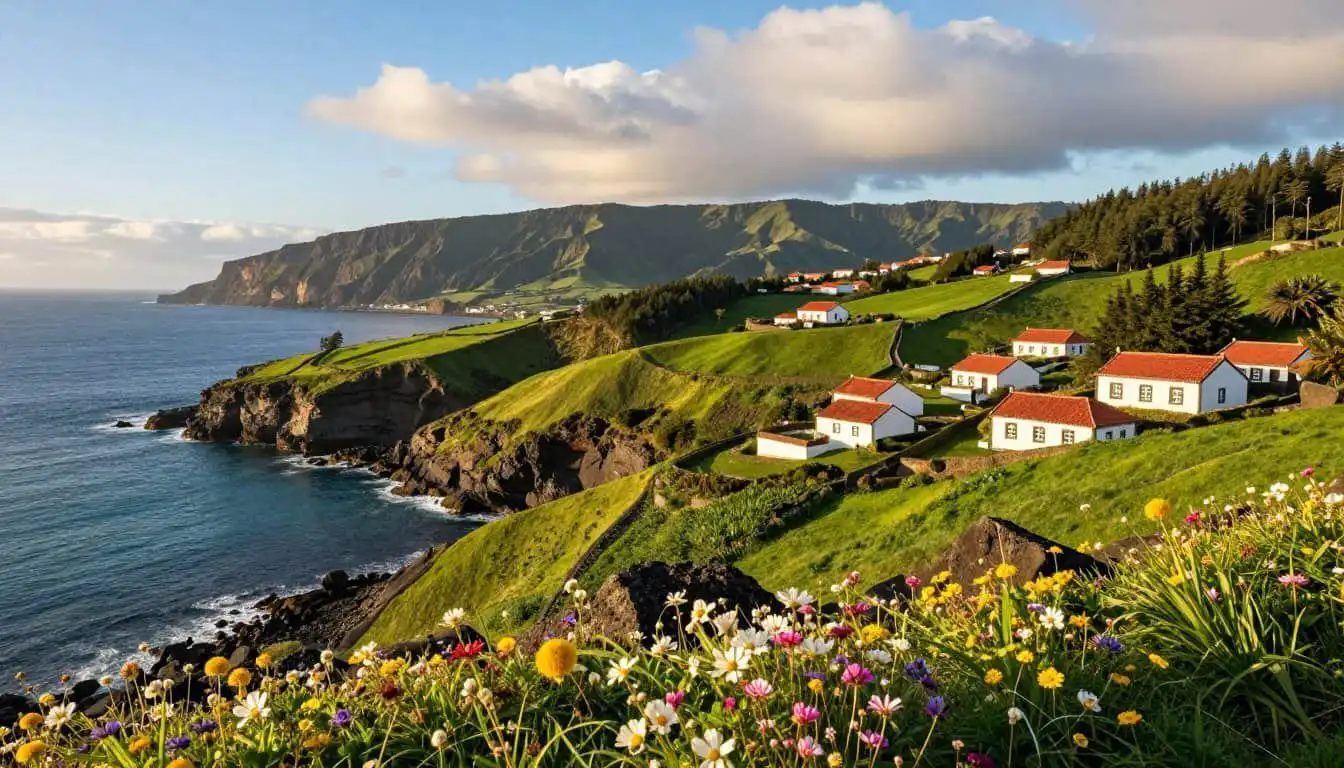

Imagine a place that mixes natural beauty with rich history and cultural charm. Let’s explore the Azores, a hidden treasure in the Atlantic.
This beautiful island getaway is in the Atlantic’s heart. It offers a special mix of Portuguese culture and untamed nature. As we show you around, you’ll see stunning landscapes. You’ll find lush green hills, crater lakes, and hot springs.
Key Takeaways
- Discover the unique charm of the Azores, a group of islands in the Atlantic.
- Explore the rich history and cultural heritage of Portugal.
- Experience the natural beauty of the islands, from landscapes to hot springs.
- Enjoy a relaxing getaway in a picturesque setting.
- Learn about the best times to visit and activities to enjoy.
Discovering The Azores, Portugal: An Atlantic Paradise
The Azores, Portugal, is a magical place with stunning nature and rich culture. It’s a group of islands in the Atlantic Ocean. Here, you’ll find amazing landscapes, a deep history, and a lively culture.
The Nine Islands of the Azores Archipelago
The Azores has nine islands, each with its own special charm. You can visit São Miguel, Terceira, Faial, Pico, Flores, Santa Maria, Graciosa, São Jorge, and Corvo. From lush green landscapes to volcanic peaks, every island is unique.
- São Miguel: Known for its hot springs and crater lakes.
- Terceira: Famous for its well-preserved Angra do Heroísmo, a UNESCO World Heritage Site.
- Pico: Features the highest peak in Portugal, a UNESCO World Heritage Site.
Why the Azores Remains Europe’s Best-Kept Secret
The Azores is a hidden gem in Europe. Its remote location and less fame compared to other places make it special. But, those who visit find a genuine and untouched experience.
The Azores offers a mix of Portuguese and Atlantic cultures. Its untouched nature makes it perfect for those looking for something different.
Planning Your Trip to the Azores
The Azores is a dream destination with its stunning landscapes and activities. But, knowing when and how to visit is key.
Planning your trip is crucial. Think about the time of year, your activities, and the documents you need.
Best Time to Visit for Ideal Weather and Activities
The Azores has mild temperatures all year. But, the best time to visit depends on what you like. For hiking and whale watching, spring and early summer are perfect. The weather is nice, and there are fewer tourists.
- Spring (March to May): Mild temperatures and blooming flora.
- Summer (June to August): Warmest weather, ideal for beach activities.
- Autumn (September to November): Comfortable temperatures and fewer crowds.
- Winter (December to February): Cooler temperatures, but still good for exploring hot springs and indoor activities.
How to Create the Perfect Azores Itinerary
Creating an Azores itinerary means picking the islands you want to see. São Miguel is a must-see for its hot springs and crater lakes. Pico and Faial offer unique landscapes and whale watching.
Essential Documents and Pre-Trip Preparations
Before you go to the Azores, make sure you have everything you need.
Visa Requirements for American Travelers
As a U.S. citizen, you don’t need a visa for Portugal. But, your passport must be valid for at least three months after you leave.
Travel Insurance Recommendations
It’s wise to have travel insurance. It should cover medical costs, trip cancellations, and delays. Make sure it includes outdoor activities.
By planning well, you’ll enjoy the Azores’ beauty, culture, and history.
How to Get to the Azores from the United States
Getting to the Azores from the United States is easy with the right info. The Azores are in the Atlantic Ocean. They offer natural beauty and cultural experiences.
Direct Flight Options and Major Airlines
Many airlines have direct flights from the U.S. to the Azores. For example, Azores Airlines flies from Boston to São Miguel Island. Knowing these options helps plan your trip better.
Navigating Connections Through Mainland Portugal
If there are no direct flights, you can go through mainland Portugal. TAP Air Portugal flies from U.S. cities to Lisbon. Then, you can get to the Azores from there.
When planning, compare direct and connecting flights. Think about travel time, cost, and ease.
Island-Hopping: How to Navigate the Azorean Archipelago
Exploring the Azores is a journey of discovery. Each island has its own natural beauty and cultural heritage. Knowing how to get around between and within the islands is key.
Inter-island Flights and Ferries
The Azores is easy to get to by air and sea. SATA Azores Airlines offers flights between islands with good schedules and prices. Ferries by Atlânticoline are a slower but scenic way to travel, like between São Miguel, Faial, and Pico.

Renting and Driving a Car in the Azores
Renting a car lets you explore at your own pace. Many car rental companies are available, both international and local. Driving is easy, with good roads and views. Make sure your car fits the island’s terrain and your plans.
Public Transportation Tips and Limitations
Public transport in the Azores is available but not much. Buses connect big towns and some tourist spots, but they’re not always on time. It’s important to plan and check schedules to get around without a car. Some islands have better public transport than others, so research your trip.
Must-Visit Islands in the Azores Archipelago
The Azores archipelago is a treasure trove of unspoiled natural beauty. Each of its nine volcanic islands offers a unique experience. You’ll find everything from lush green valleys to towering volcanic peaks.
São Miguel: Step-by-Step Guide to the Green Island
São Miguel, the largest island, is known as the “Green Island” for its lush landscapes. Exploring Sete Cidades is a must. It has twin lakes, Lagoa Azul and Lagoa Verde, in a volcanic crater.
Exploring Sete Cidades and Lagoa do Fogo
Visit the Sete Cidades twin lakes for scenic views. Then, go to Lagoa do Fogo. It’s a crater lake with serene beauty and stunning surroundings.
Furnas Valley and Its Geothermal Wonders
Furnas Valley is a unique geothermal area. Here, you can see hot springs and geysers. The Terra Nostra Park is a highlight, with thermal pools and a lush botanical garden.
Pico and Faial: How to Experience the Central Group
The central group of islands, including Pico and Faial, offers adventure and relaxation. Pico Island has Mount Pico, Portugal’s highest peak. Faial is famous for its Capelinhos volcano and whale watching opportunities.
On Pico, hiking to Mount Pico’s summit is an unforgettable experience. Faial is great for exploring the marina in Horta and trying local cuisine.
Terceira, Flores, and Beyond: Hidden Treasures
Terceira and Flores are lesser-visited islands, offering a secluded experience. Terceira is known for its historic sites, including the Angra do Heroísmo, a UNESCO World Heritage Site.
Flores is a haven for nature lovers. It’s dotted with craters and waterfalls, perfect for hiking and exploration.
| Island | Main Attractions | Activities |
|---|---|---|
| São Miguel | Sete Cidades, Lagoa do Fogo, Furnas Valley | Hiking, exploring geothermal areas |
| Pico | Mount Pico | Summit hiking, whale watching |
| Faial | Capelinhos volcano, Horta marina | Whale watching, exploring marina |
| Terceira | Angra do Heroísmo | Visiting historical sites |
| Flores | Craters, waterfalls | Hiking, nature exploration |
Top Natural Attractions and How to Experience Them
The Azores archipelago is full of natural wonders. From the moment you arrive, you’ll see stunning landscapes. These show the power and beauty of nature.
The Azores has many natural attractions. You can see volcanic lakes, hot springs, hiking trails, and whale watching spots. Each island has its own special experience. It’s perfect for nature lovers and adventure seekers.
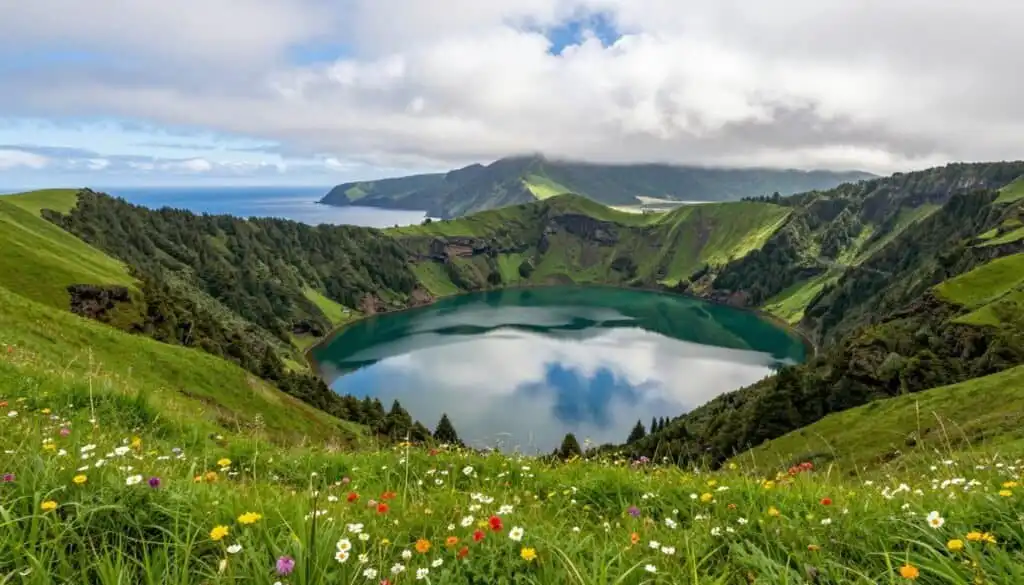
How to Visit the Best Volcanic Lakes and Hot Springs
The Azores has some of the world’s most beautiful volcanic lakes. Lake Furnas on São Miguel Island and Lake Fogo on Fogo Island are must-sees. You can also relax in natural hot springs, like those at Terra Nostra Park.
To fully enjoy these sights, rent a car. This way, you can explore at your own pace. Remember to check the opening hours and any rules for visiting.
Guide to Hiking Trails for All Skill Levels
The Azores has hiking trails for everyone. You can find easy walks or tough treks. The trails offer amazing views of volcanic craters, forests, and coastlines.
Popular spots include the Sete Cidades trail on São Miguel Island and Mount Pico on Pico Island. Always check the weather and trail conditions before you go. Hiring a local guide can make your experience even better.
Whale Watching: When, Where and How
The Azores is great for whale watching. It’s a key place for many cetaceans, like sperm whales and bottlenose dolphins.
To go whale watching, join a guided tour with a responsible operator. The best time is from April to October. The seas are calmer, and you’re more likely to see whales.
Where to Stay in the Azores: Accommodation Guide
The Azores has many places to stay, from cheap to fancy. You can dive into local culture, enjoy nature, or just chill. There’s something for everyone here.
Choosing the Right Island
Choosing an island is tough with nine to pick from. Think about what you want to do and see. São Miguel is great for nature and adventure, with lakes and hot springs.
If you prefer a calm, rural vibe, Flores or Corvo might be perfect.
Authentic Rural Houses and Quintas
Stay in a rural house or quinta for a real local feel. These places show you how locals live and are set in stunning views. Quintas are old estate houses turned into hotels, mixing history and comfort.
Budget to Luxury Options
The Azores has something for every wallet. For less money, try guesthouses or hostels. They’re comfy and affordable.
For a splurge, luxury hotels and resorts offer top-notch service and amenities. They make your vacation extra special.
| Accommodation Type | Price Range | Features |
|---|---|---|
| Hostel/Dorm | $20-$40 per night | Basic, shared accommodations, ideal for backpackers |
| Guesthouse | $60-$100 per night | Simple, family-run establishments, often with breakfast included |
| Luxury Hotel | $200-$500 per night | High-end amenities, spas, and often stunning views |
Savoring Azorean Cuisine: Food and Drink Guide
Discover the unique tastes of Azorean cuisine. It’s a mix of traditional dishes and local favorites. These reflect the islands’ history and culture. The Azores, in the Atlantic, has a special food scene. It’s shaped by its location and cultural background.

Must-Try Traditional Dishes and Where to Find Them
The Azores is famous for its traditional food. It shows the islands’ rich cultural heritage. Here are some dishes you must try:
- Cozido das Furnas, a stew cooked underground using the heat from the volcanic soil.
- Fresh seafood, including fish and shellfish, often served grilled or in stews.
Cozido das Furnas: The Underground-Cooked Stew
Cozido das Furnas is a unique dish. It’s cooked in the volcanic soil of Furnas, São Miguel Island. The slow cooking gives the meat and veggies a special flavor. It’s a must-try when you visit the Azores.
Seafood Specialties of the Islands
The Azores is surrounded by the Atlantic Ocean. This means lots of fresh seafood. You can try grilled fish, seafood stews, and dishes with limpets and barnacles. Enjoy these in local restaurants across the islands.
How to Experience Local Wine and Tea Production
The Azores is also famous for its wine and tea. The volcanic soil and mild climate are perfect for growing grapes and tea leaves.
Some key experiences include:
- Visiting vineyards on the island of Pico to taste local wines.
- Exploring tea plantations on Gorreana Tea Plantation, one of the oldest tea plantations in Europe.
These experiences let you see how these products are made. You can also taste some of the best local products.
Practical Travel Tips for American Visitors
For Americans planning to visit the Azores islands, knowing a few key tips can help a lot. Here’s some advice to make your trip smooth and fun.
Managing Currency and Payments
The Azores use the Euro as their official currency. While many places take credit cards, it’s smart to carry some cash. ATMs are everywhere, and you can exchange money at airports or banks.
Weather Patterns and What to Pack
The Azores has a mild climate all year, but the weather can change quickly. Pack layers for your trip, including waterproof items. Summer is warm, but winters can be cool, especially at night.
Navigating Language Barriers
Many Azoreans speak English, but learning some Portuguese can make your trip better. Basic phrases like “obrigado/obrigada” (thank you) and “desculpe” (excuse me) show respect for the culture.
Health and Safety
The Azores is generally safe, but be careful with your belongings. Make sure you have any needed vaccinations before you go. Also, think about getting travel insurance that covers medical costs.
| Tip | Description |
|---|---|
| Currency | Euro (€) |
| Language | Portuguese (English widely spoken) |
| Weather | Mild climate, pack layers |
Conclusion: Why the Azores Should Be Your Next Adventure
The Azores is a hidden gem waiting to be discovered. It boasts breathtaking landscapes and a rich cultural heritage. The Azores is a compelling travel destination with diverse adventure activities.
The nine islands of the Azores are a mix of natural beauty. You can find stunning volcanic lakes and vibrant marine life. Whether you want to relax in thermal hot springs, explore the underwater world, or hike through lush landscapes, the Azores has it all.
When planning your next adventure, think about the Azores. It offers unspoiled nature, warm hospitality, and a unique experience of Portugal. With growing popularity among U.S. travelers, the Azores is set to become a top choice for unforgettable experiences.
FAQ
What is the best time to visit the Azores?
The best times to visit are spring (April-May) and autumn (September-October). These periods offer mild weather and fewer crowds.
Do I need a visa to travel to the Azores, Portugal?
As part of Portugal, Americans don’t need a visa for up to 90 days for tourism. Still, always check the latest visa rules before your trip.
How do I get to the Azores from the United States?
Fly into Lisbon, Portugal, then take a connecting flight to the Azores. Direct flights from the US are rare, but we can help find options.
What are the must-try dishes in the Azores?
Try Cozido das Furnas, a stew cooked underground, and fresh seafood like grilled fish. Don’t miss Fila da Terceira sausage and Bolo Lêvedo, a sweet bread.
Can I rent a car in the Azores?
Yes, we can arrange car rentals in the Azores. Many companies are at the airports. Renting a car lets you explore freely.
What are the top natural attractions in the Azores?
Visit the Sete Cidades lakes on São Miguel and explore Furnas Valley. Hike on Pico Island to reach Mount Pico’s summit.
How do I navigate between the Azores islands?
Use inter-island flights or ferries to travel. Plan ahead and book early to secure your spot.
What is the currency used in the Azores?
The Euro is the official currency. Carry some local currency for small buys and use credit cards for bigger purchases.
Are there any specific health and safety precautions I should take when traveling to the Azores?
Stay safe by being aware of your surroundings and keeping valuables secure. Make sure you have all needed vaccinations before your trip.