
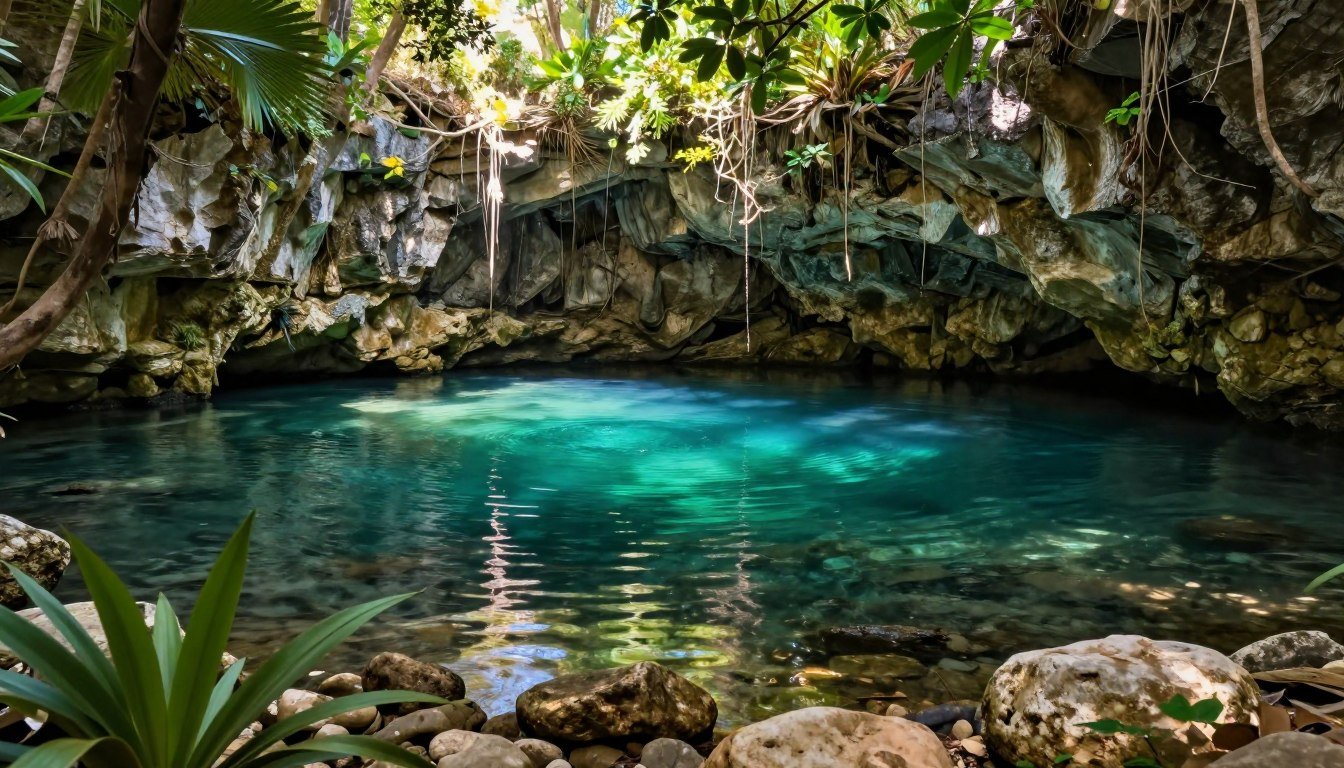

As we explore Mexico, we’re surrounded by Tulum’s hidden gems. The cenotes, or sinkholes, are not just beautiful; they’re also full of history and culture.
Our adventure to these magical cenotes takes us into Mexico’s underwater world. Here, the water is so clear it invites us to dive in and see what’s beneath. Tulum’s cenotes are a must-see for anyone traveling.
Key Takeaways
- Explore the natural beauty of Tulum’s cenotes
- Discover the history and culture behind these sinkholes
- Experience the thrill of swimming in crystal-clear waters
- Learn about the significance of cenotes in Mexico
- Plan your trip to Tulum with our expert tips
What Are Cenotes? Understanding These Natural Wonders
Cenotes, or ‘dz’onot’ in Mayan, are key to the Yucatan’s beauty. They show the area’s unique geology and rich culture. For centuries, people have been drawn to their beauty and historical value.
The Geological Formation of Cenotes
Cenotes form when limestone caves collapse, revealing underground water. This process, happening over thousands of years, has made the stunning cenotes in Tulum.
The Historical and Cultural Significance
The ancient Maya saw cenotes as sacred. They were not just water sources but also key in their rituals and ceremonies.
Maya Rituals and Beliefs
The Maya thought cenotes were doors to the underworld. They were sacred for rituals and human sacrifices. These practices were a big part of their religion and life.
Archaeological Discoveries
Recent digs have found many artifacts in cenotes. These discoveries give us a peek into the Maya’s lives and beliefs.
| Archaeological Findings | Significance |
|---|---|
| Pottery and Ceramics | Indicative of ritualistic practices |
| Jewelry and Ornaments | Suggests the presence of human sacrifice |
| Human Remains | Evidence of ritualistic human sacrifice |
Exploring Tulum’s Cenotes, Mexico: A Natural Paradise
The Yucatan region, especially Tulum, boasts some of the most stunning cenotes. These natural sinkholes are not just beautiful. They also reveal the area’s geological past.
Why Tulum’s Cenotes Are Unique
Tulum’s cenotes are special because of their varied features and the ecosystem around them. They form in limestone, which is full of minerals. This makes their waters crystal clear.
Types of Cenotes You’ll Encounter
Tulum has many different cenotes, each with its own charm. They can be divided into three main types: open, semi-open, and cave cenotes.
Open Cenotes
Open cenotes are right under the sky, making them bright and inviting. They’re great for swimming and snorkeling.
Semi-Open Cenotes
Semi-open cenotes have a roof that’s only partially there. This mix of sun and shade makes for a unique visit.
Cave Cenotes
Cave cenotes, or closed cenotes, are fully inside caves. They offer an exciting adventure for those who dare to explore.
| Type of Cenote | Description | Experience |
|---|---|---|
| Open Cenotes | Exposed to the sky | Swimming, snorkeling |
| Semi-Open Cenotes | Partial roof | Mixed sunlight and shade |
| Cave Cenotes | Fully enclosed | Adventure, exploration |
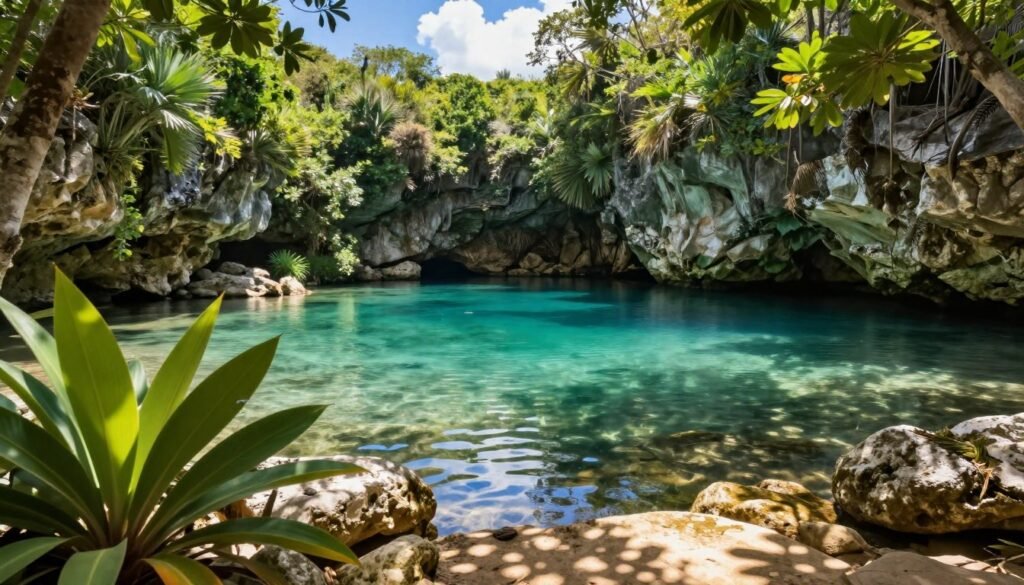
Knowing about the different cenotes in Tulum makes visiting more fun. It lets travelers pick the ones that match their interests and bravery.
The Most Beautiful Cenotes in Tulum
Tulum’s cenotes are a treasure trove of natural beauty. Each one has its own charm. From the crystal-clear waters of Gran Cenote to the unique formations of Cenote Calavera, there’s a cenote for every kind of adventurer.
Gran Cenote: The Crown Jewel
Gran Cenote is one of the most popular and beautiful cenotes in Tulum. Its crystal-clear waters offer a perfect spot for swimming and snorkeling.
What to See and Do
Visitors can explore the underwater world, spotting fish and other marine life. The cenote is surrounded by lush vegetation, making it a great spot for nature lovers.
Practical Information
Gran Cenote is open daily from 8 am to 5 pm. The entrance fee is approximately $15 per person. Snorkeling gear and life jackets are available for rent.
Cenote Calavera: The Temple of Doom
Cenote Calavera, also known as “Temple of Doom,” is a cenote that will challenge even the most experienced divers. Its unique formations and deep waters make it a thrilling experience.
What to See and Do
Dive into the depths of Cenote Calavera and explore its underwater caverns. The cenote’s name is derived from its skull-like appearance.
Practical Information
Cenote Calavera is open from 9 am to 4 pm. The entrance fee is around $10 per person. Advanced diving certification is recommended.
| Cenote Name | Entrance Fee | Opening Hours |
|---|---|---|
| Gran Cenote | $15 | 8 am – 5 pm |
| Cenote Calavera | $10 | 9 am – 4 pm |
| Cenote Dos Ojos | $20 | 8 am – 6 pm |
| Cenote Car Wash | Free | 8 am – 6 pm |
Cenote Dos Ojos: The Twin Eyes
Cenote Dos Ojos is known for its two distinct sinkholes, making it a unique spot for snorkeling and diving.
What to See and Do
Explore the crystal-clear waters and observe the diverse marine life. The cenote is also a great spot for photography.
Practical Information
Cenote Dos Ojos is open from 8 am to 6 pm. The entrance fee is approximately $20 per person. Snorkeling and diving gear are available for rent.
Cenote Car Wash: A Hidden Gem
Cenote Car Wash is a lesser-known cenote that offers a more secluded experience. Its tranquil atmosphere makes it perfect for relaxation.
What to See and Do
Enjoy a peaceful swim or simply relax in the serene surroundings. It’s also a great spot for picnics.
Practical Information
Cenote Car Wash is open daily from 8 am to 6 pm. There is no entrance fee, making it an attractive option for budget-conscious travelers.
Planning Your Cenote Adventure
Planning a trip to Tulum’s cenotes is more than picking a place. It’s about timing and getting ready. To have a great time, think about these things.
Best Time to Visit Tulum’s Cenotes
The best time to go to Tulum’s cenotes depends on what you like. If you want sunny days for swimming, go from December to April. But, it’s also the busiest time.
Seasonal Considerations
The dry season is great for clear skies and warm weather. It’s perfect for swimming. But, the rainy season from May to November is quieter with fewer people.
Avoiding Crowds
To skip the crowds, go early in the morning or late afternoon. These times are peaceful and great for photos.
Entrance Fees and Opening Hours
Most cenotes charge an entrance fee. Fees and hours can change. Always check before you go.
Guided Tours vs. Independent Exploration
Choosing between a guided tour or exploring alone depends on what you want. Think about your interests.
Recommended Tour Operators
If you like a guided tour, try Kanopi Expeditions or Adventure Tulum. They have great guides and tours with everything you need.
By thinking about these points, you can plan a trip that fits your style. Enjoy exploring Tulum’s cenotes.
What to Pack for Your Cenote Experience
Before you explore Tulum’s amazing cenotes, let’s discuss what to bring. It’s important to pack the right gear for a safe, fun, and green experience.
Essential Gear for Swimming and Snorkeling
Having good swimming gear is a must. You’ll need a swimsuit, snorkeling mask, and fins for underwater adventures. Don’t forget a rash guard or swim shirt to protect against the sun.
Eco-Friendly Sunscreen and Why It Matters
It’s vital to protect your skin from the sun. Use eco-friendly sunscreen that’s safe for the cenote’s ecosystem.
Photography Equipment Tips
Bring a waterproof camera or phone case for photos. A polarizing filter can help reduce glare on the water.
Food, Water, and Other Necessities
Stay hydrated with refillable water bottles. Pack snacks like fruits or energy bars. Remember a towel and a change of clothes.
Getting to the Cenotes: Transportation Options
There are many ways to get to Tulum’s cenotes. You can choose based on what you value most: independence, cost, or ease. Each option has its own benefits.
Renting a Car or Scooter
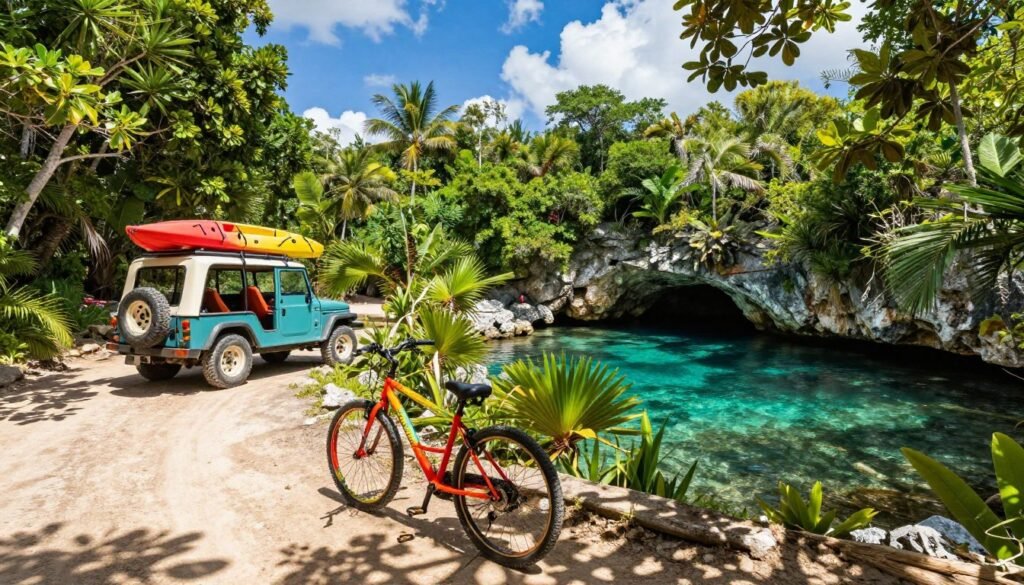
Renting a car or scooter lets you explore Tulum’s cenotes on your own schedule. Tulum has several rental companies with different vehicles to choose from.
Rental Companies and Costs
Economy Rent a Car and Alamo have good prices. A car costs about $40-$80 a day, and a scooter is $20-$40.
Driving Tips
Driving in Mexico can be different. Make sure you have a valid driver’s license. Also, think about getting insurance that covers Mexico.
| Vehicle Type | Daily Rate | Recommended For |
|---|---|---|
| Economy Car | $40-$60 | Budget travelers |
| Scooter | $20-$40 | Short distances, solo travelers |
| 4×4 Vehicle | $80-$120 | Rugged terrain, group travel |
Taking Colectivos (Shared Vans)
Colectivos are a budget-friendly and eco-friendly way to get to the cenotes. They follow set routes and can be picked up at specific stops.
Routes and Costs
Colectivos go to places like Gran Cenote and Cenote Calavera. The fare is about $5-$10 per person, one way.
Taxi and Tour Options
For an easy trip, take a taxi or join a guided tour. Many tours include transport to several cenotes.
Safety Tips for Cenote Swimming and Diving
Exploring Tulum’s cenotes is thrilling, but safety is key. Knowing the safety rules helps us enjoy these spots safely. It also keeps them beautiful for future visitors.
Understanding Depth and Current Conditions
Before diving, know the cenote’s depth and currents. Some cenotes are deep, and currents can be strong. Always check the water before swimming and ask locals if you’re not sure.
Snorkeling and Diving Precautions
Snorkeling or diving in Tulum’s cenotes requires care. Make sure you have the right equipment and training. Always check your diving gear before swimming.
Equipment Checks
Check your diving gear carefully. Look for leaks, ensure your regulator works, and that your dive computer is accurate.
Buddy System Importance
Diving with a buddy is crucial. Stay close to your partner. This way, you can help each other in emergencies.
Respecting Wildlife and Natural Formations
Tulum’s cenotes are full of wildlife and unique spots. Don’t touch the formations or disturb the animals. This keeps the cenotes safe and beautiful for everyone.
First Aid and Emergency Procedures
Even with precautions, emergencies can happen. Know basic first aid and the cenote’s emergency plans. This includes knowing how to call for help and what to do in an accident.
By following these safety tips, we can enjoy Tulum’s cenotes safely. Remember, safety is everyone’s responsibility. Our careful actions help protect these amazing places.
Capturing the Magic: Photography Tips for Cenotes
The cenotes of Tulum are a photographer’s dream. But, they also come with their own set of challenges. To get the best shots, you need to handle tricky light, master underwater photography, and use creative composition.
Dealing with Challenging Light Conditions
Cenotes often have little natural light, especially in caves. Adjusting your camera settings is key to getting clear photos.
Camera Settings for Dark Caves
In dark caves, use a low ISO (100-400) and a wide aperture (f/2.8-f/4). This lets in more light. A slower shutter speed can also work, but watch out for camera shake.
Managing Sunbeams and Reflections
Sunlight through the water creates beautiful sunbeams and reflections. A polarizing filter can reduce glare and make these effects stand out.
Underwater Photography Techniques
Underwater photography in cenotes needs special skills. Getting close to your subject and using a fast shutter speed are key. This helps capture the beauty of the underwater world.
Equipment Recommendations
A waterproof camera or housing is a must. Look for a camera that does well in low light and has a wide-angle lens.
Composition Tips
Focus on the background and try to keep it simple. Use the natural formations and light to create interesting shots.
Best Angles and Perspectives
Try different angles to add variety to your photos. Shoot from above, below, or at eye level to show off the cenote’s unique features.
By learning these techniques and dealing with the challenges, you can capture the magic of Tulum’s cenotes. And create photos that will be remembered for a long time.
Preserving the Beauty: Responsible Tourism at Cenotes
Exploring Tulum’s stunning cenotes is a must. But, we must think about how we impact these natural wonders. With more visitors, there’s a big risk of harming the environment if we’re not careful.
Environmental Impact of Tourism
Tourism can pollute, destroy habitats, and overuse local resources. Cenotes, with their delicate ecosystems, are especially at risk from environmental changes.
How to Be a Responsible Visitor
To leave a small footprint, we need to act responsibly. This means disposing of waste correctly and following local rules.
Waste Management
Proper waste disposal is key. Always use the trash cans and recycle when you can.
Respecting Local Rules
Following local rules helps keep the cenotes safe. This includes not touching formations and respecting wildlife.
Supporting Local Conservation Efforts
Supporting local conservation helps protect these natural gems. Join guided tours that use sustainable practices and help out with local conservation projects.
By being aware of our actions, we can enjoy Tulum’s cenotes without harming them. Let’s make sure these wonders are here for future generations. Responsible tourism is crucial for their survival.
Conclusion: The Unforgettable Magic of Tulum’s Cenotes
Our journey through Tulum’s cenotes has left us with memories we won’t forget. The beauty and magic of these sites are truly enchanting. Swimming in crystal-clear waters, surrounded by lush greenery and history, is a unique experience.
Tulum’s cenotes offer a chance to connect with nature like nowhere else. Whether you’re snorkeling, diving, or just swimming, these cenotes are unforgettable. They show us the beauty of the natural world.
Thinking about Tulum’s cenote magic reminds us to protect these wonders. We must be careful not to harm them. By doing so, we ensure Tulum’s cenotes will continue to amaze and enchant people for years.
FAQ
What is a cenote?
A cenote is a natural sinkhole filled with clear water. It forms when the ground above a cave collapses. We explore Tulum’s cenotes in Mexico, highlighting their unique features and cultural importance.
Are cenotes safe to swim in?
Yes, most cenotes are safe for swimming. Always check the conditions and follow safety tips. We discuss how to understand depth and current conditions.
What should I pack for a cenote visit?
Bring swimwear, eco-friendly sunscreen, and photography gear. Don’t forget food, water, and other essentials for a comfortable visit.
Can I visit cenotes independently, or do I need a guided tour?
We guide you on planning your cenote adventure. Decide between guided tours or exploring on your own. We recommend tour operators for guided experiences.
How do I get to the cenotes in Tulum?
We explain transportation options like renting cars or scooters. You can also use colectivos, taxis, or tour services. We provide cost tips to help you choose.
What are some popular cenotes to visit in Tulum?
We introduce popular cenotes like Gran Cenote and Cenote Calavera. Learn what to see and do at Cenote Dos Ojos and Cenote Car Wash. We offer practical visitor information.
How can I be a responsible visitor to the cenotes?
Responsible tourism is key when visiting cenotes. We discuss the environmental impact and how to minimize it. Supporting local conservation and sustainable tourism is also important.