
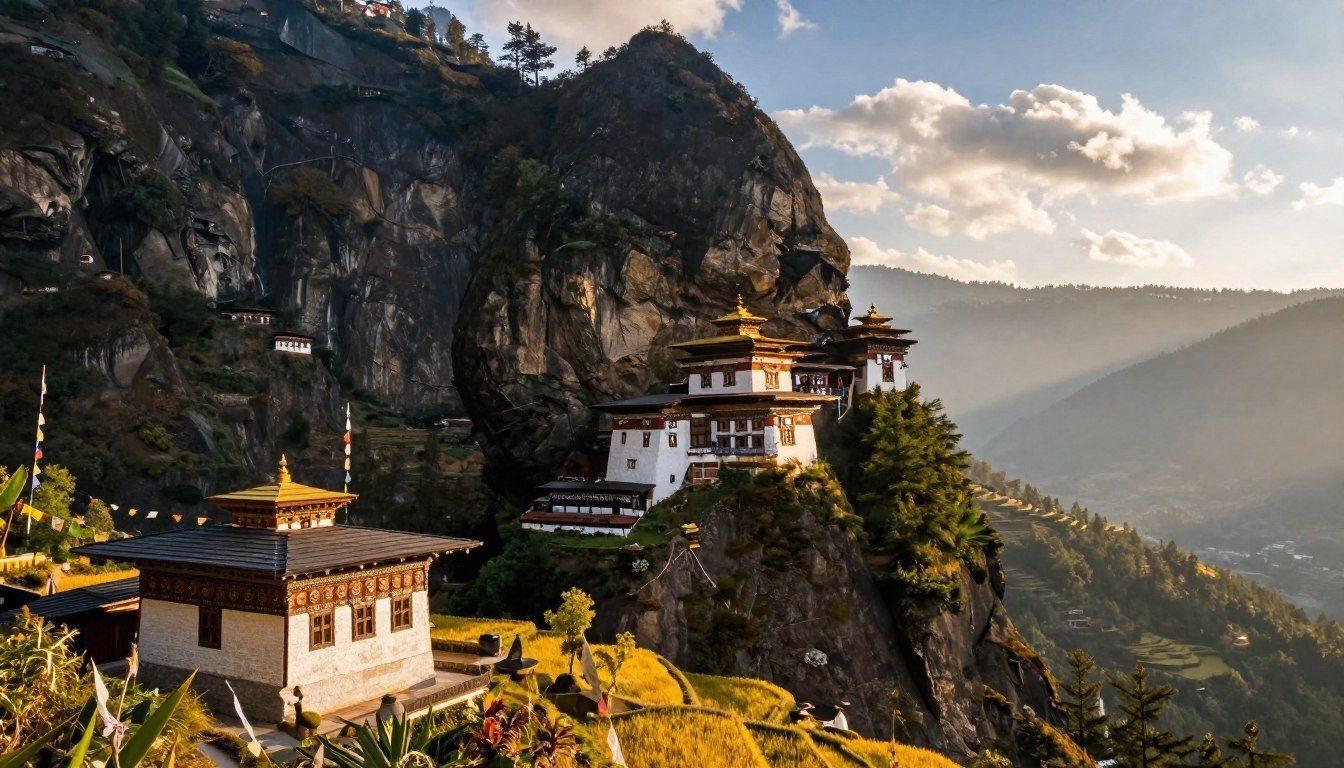

We invite you to explore the enchanting world of Bhutan, a kingdom nestled in the Himalayas. Known as the “Land of the Thunder Dragon“, this tiny nation is a treasure trove of rich cultural heritage and breathtaking landscapes.
As we journey through this mystical land, we discover pristine valleys, majestic mountains, and vibrant monasteries. Bhutan is a place where tradition and modernity blend seamlessly, creating a unique travel experience.
Key Takeaways
- Explore Bhutan’s rich cultural heritage
- Experience the breathtaking landscapes of the Himalayas
- Visit vibrant monasteries and pristine valleys
- Discover the unique blend of tradition and modernity
- Enjoy a serene and enchanting travel experience
Bhutan – The “Land of the Thunder Dragon”: An Overview
Bhutan is the last Himalayan kingdom, known for its rich cultural heritage. It shows its commitment in development, tourism, and daily life.
The Last Himalayan Kingdom
Bhutan is the last Himalayan kingdom, keeping its sovereignty and culture alive. Its strategic location between India and China has shaped its history and politics. Yet, it has kept its independence.
Gross National Happiness Philosophy
The Gross National Happiness (GNH) philosophy guides Bhutan’s growth. It focuses on the well-being of its people and the environment, not just economic growth. This is seen in its sustainable tourism, which aims to protect the environment and local communities.
The GNH philosophy has four pillars:
| Pillar | Description |
|---|---|
| Psychological Well-being | Promoting mental health and happiness |
| Physical Health | Ensuring good health and well-being |
| Education and Skills | Developing education and skills for life |
| Good Governance | Fostering good governance and leadership |
Bhutan’s Unique Position in the Modern World
Bhutan’s dedication to its culture and GNH philosophy makes it stand out. It offers a unique travel experience for those who want to see sustainability and cultural preservation in action.
In conclusion, Bhutan’s identity as the “Land of the Thunder Dragon” attracts responsible tourists. Its mix of tradition and modernity, under the GNH philosophy, offers a special experience for visitors.
Planning Your Journey to Bhutan
Planning a trip to Bhutan means understanding its unique tourism policy. The country follows a high-value, low-impact tourism approach. This helps keep its culture and environment safe.
Understanding the Tourism Policy
The tourism policy in Bhutan focuses on the daily tariff system. This system is key to sustainable tourism.
Daily Tariff System Explained
The daily tariff system requires tourists to pay a fixed rate per day. This rate covers expenses like accommodation, meals, and transportation. It helps manage tourist numbers and supports the local economy.
- Accommodation in 3-star hotels or equivalent
- Meals as per the itinerary
- Guided tours
- Transportation
What’s Included in Your Package
Booking a package tour includes:
- A pre-assigned tour guide
- All necessary documentation and permits
- Cultural programs and events
Required Documents and Visa Process
To enter Bhutan, we need a visa. Our tour operator will help with this. We’ll need a valid passport, a photo, and a visa application form.
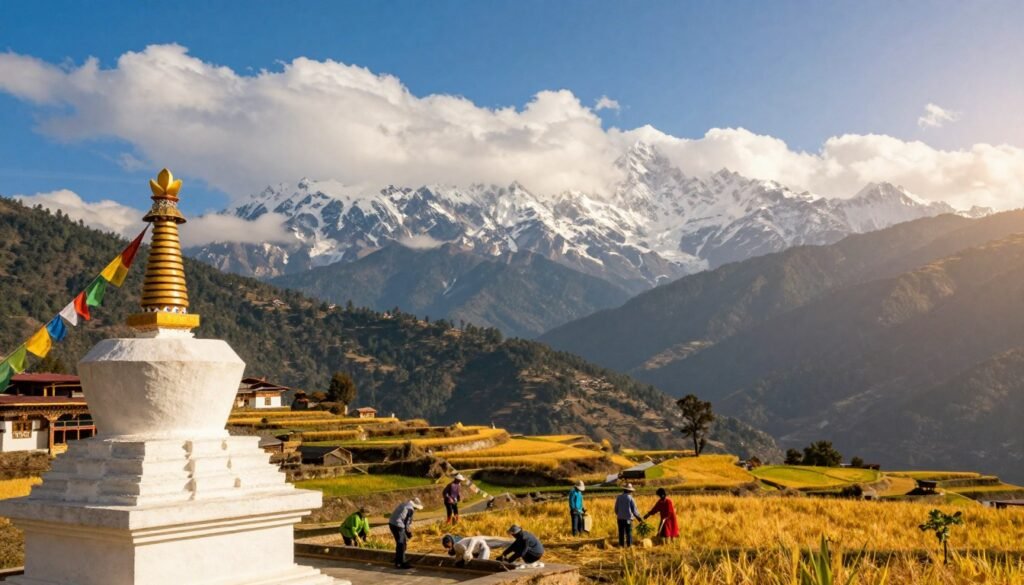
How to Choose an Authorized Tour Operator
Choosing the right tour operator is important. Look for ones licensed by the Tourism Council of Bhutan (TCB) and with good reviews. They’ll take care of everything, from booking to permits.
Best Time to Visit Bhutan
The best time to visit Bhutan depends on what you want to see. You can enjoy vibrant festivals or serene landscapes.
Seasonal Considerations
Bhutan has four distinct seasons. Knowing these seasons helps plan your trip.
Spring (March-May)
Spring is a best time to visit Bhutan. The weather is mild, perfect for trekking. The valleys are filled with blooming rhododendrons and flowers.
Summer (June-August)
Summer brings monsoon rains. This makes some roads impassable. But, the landscapes are lush and green, ideal for fewer tourists.
Fall (September-November)
Autumn is another peak tourist season. The weather is clear and stable. It’s perfect for hiking and sightseeing.
Winter (December-February)
Winter is cold, especially in high altitudes. But, it’s great for seeing the country without crowds. Some high-altitude passes may be closed due to snow.
Festival Calendar and Cultural Events
Bhutan’s festivals, or tshechus, are vibrant. They are held in spring and fall. These festivals attract tourists from around the world.
How to Plan Around Weather Patterns
Plan your visit based on Bhutan’s weather. Spring and autumn are the best seasons for most travelers.
Getting to and Around Bhutan
Bhutan is a kingdom in the Himalayas, easy to reach by air and land. We’ll help you get to this magical country and explore its beautiful landscapes.
Booking Flights to Paro International Airport
The main way into Bhutan is Paro International Airport. It gets flights from cities like Bangkok, Delhi, and Kathmandu. Book your flights early, especially when many people travel.
Navigating Land Border Crossings from India
Travelers from India can also enter Bhutan by land. The main spots are Phuentsholing and Gelephu. Always check the latest rules for crossing by land.
Transportation Options Within the Country
Getting around Bhutan is easy with many ways to travel.
Private Vehicles with Drivers
Hiring a private vehicle with a driver is a great choice. It’s flexible and lets you see the views without driving.
Public Transportation Possibilities
For a real local feel, try public transport. Buses link big towns and cities. It’s cheap and shows you the country’s heart.
Where to Stay: Accommodation Guide
Finding the right place to stay in Bhutan is key for a great trip. The kingdom has many options for all tastes and budgets.
Traditional Homestays: Authentic Experiences
Staying in a traditional homestay is a unique way to see Bhutan. You’ll live with a local family, share meals, and join in daily life. It’s a great way to learn about Bhutanese culture.
Luxury Resorts and Heritage Hotels
For a fancy stay, Bhutan has luxury resorts and heritage hotels. They mix old architecture with new comforts. Many are in beautiful spots, offering stunning views.
Monastery Stays for the Adventurous
Staying at a monastery is a special experience. Some monasteries welcome travelers, letting you see spiritual life up close. It’s perfect for those looking for a quiet, spiritual trip.
How to Book the Best Accommodations
Booking through a licensed tour operator is wise. They help pick the best place for you. Always check reviews and the location before you decide. Planning early is important, especially when many people travel.
Choosing the right place to stay makes your Bhutan trip unforgettable.
Must-Visit Destinations in Bhutan
Bhutan is a land of contrasts, where old traditions meet stunning landscapes. It’s a country that blends cultural heritage with natural beauty. This makes it perfect for those seeking adventure and spiritual growth.
Thimphu: Exploring the Capital City
Thimphu, Bhutan’s capital, is a mix of old and new. It has many attractions to see, including:
- Buddha Dordenma: A massive Buddha statue that symbolizes peace and prosperity.
- Memorial Chorten: A stupa built in memory of the third king of Bhutan.
- Tashichho Dzong: A fortress and monastery that serves as the seat of the government.
- Weekend Market: A bustling marketplace where locals sell traditional handicrafts and fresh produce.
Buddha Dordenma and Memorial Chorten
The Buddha Dordenma is one of the largest Buddha statues in the world, symbolizing peace and prosperity. The Memorial Chorten is a beautiful stupa built in memory of the third king of Bhutan, Jigme Dorji Wangchuck.
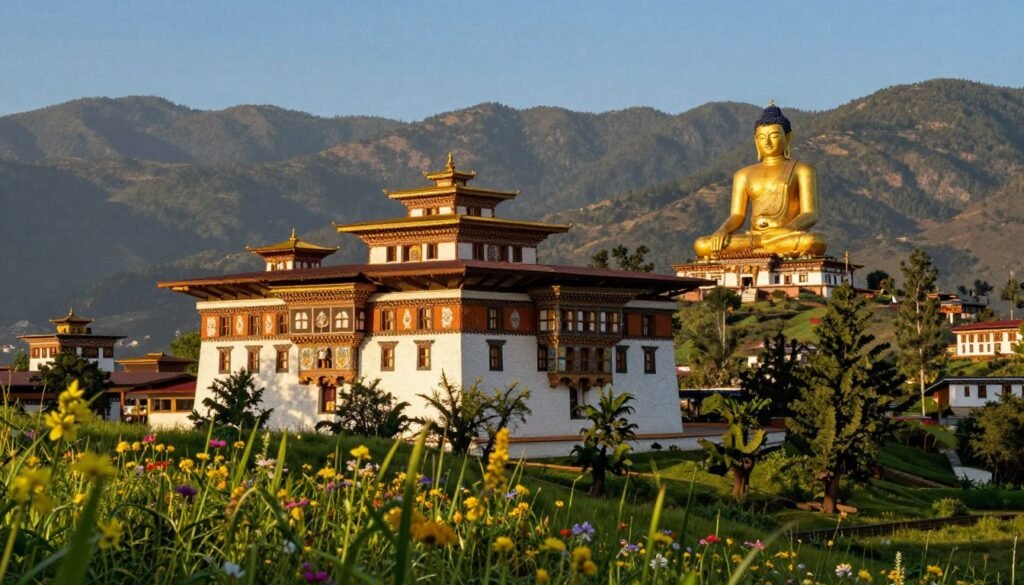
Tashichho Dzong is a magnificent fortress and monastery that serves as the seat of the government. The Weekend Market is a great place to experience local culture, with vendors selling everything from traditional handicrafts to fresh produce.
Paro and How to Hike to Tiger’s Nest Monastery
Paro is a historic town known for its well-preserved traditional architecture and its proximity to the famous Tiger’s Nest Monastery. The hike to Tiger’s Nest is a challenging but rewarding experience, offering breathtaking views of the surrounding landscape.
Punakha Valley and Dzong
The Punakha Valley is a beautiful and fertile region known for its stunning landscapes and historic dzongs. The Punakha Dzong is one of the most beautiful and important dzongs in Bhutan, serving as the administrative center of the district.
Bumthang: Bhutan’s Spiritual Heartland
Bumthang is considered the spiritual heartland of Bhutan, with numerous sacred sites and temples. Visitors can explore ancient monasteries and experience the local culture.
Off-the-Beaten-Path Locations
For adventurous travelers, Bhutan offers several off-the-beaten-path locations, including remote valleys and lesser-known dzongs. These destinations provide a unique opportunity to experience the untouched beauty and culture of Bhutan.
How to Respectfully Immerse in Bhutanese Culture
To truly experience Bhutan, we must first learn how to respect and appreciate its unique cultural identity. Bhutanese culture is deeply intertwined with Buddhism. Understanding this connection is crucial for a meaningful visit.
Understanding Buddhist Traditions
Bhutan is a country where Buddhist traditions are not just practiced but are a way of life. The culture is rich with rituals, ceremonies, and customs that are influenced by Buddhism. Visitors can gain a deeper understanding by participating in or observing these practices.
Key Buddhist practices include:
- Meditation and chanting
- Offering prayers and circumambulating sacred sites
- Participating in masked dances and festivals
Proper Etiquette in Temples and Sacred Sites
When visiting temples and sacred sites, it’s essential to follow proper etiquette to show respect. This includes dressing modestly and behaving reverently.
Dress Code Guidelines
Visitors are expected to dress modestly, covering their shoulders and knees as a sign of respect. The traditional Bhutanese attire, known as gho for men and kira for women, is often worn during visits to sacred sites.
Photography Rules
Photography inside temples and sacred sites may be restricted. It’s crucial to ask for permission before taking pictures, especially of religious artifacts or during ceremonies.
Participating in Local Customs
Participating in local customs and traditions can greatly enhance one’s experience in Bhutan. Visitors can engage in various cultural activities, such as attending a traditional archery competition or participating in a local festival.
Learning Basic Dzongkha Phrases
Learning a few basic phrases in Dzongkha, the national language, can go a long way in showing respect for the culture. Simple greetings like “Kuzu zangpo” (hello) and “Tashi delek” (good luck or congratulations) can make interactions more meaningful.
By embracing these practices, visitors can ensure a respectful and enriching experience in Bhutan. This fosters a deeper connection with the local culture and community.
Outdoor Adventures and Activities Guide
Bhutan is a paradise for outdoor lovers. Its untouched landscapes and diverse terrain offer many activities. You can trek the Himalayas or spot wildlife in national parks.
How to Prepare for Himalayan Treks
Getting ready for a trek in Bhutan means being fit and used to high altitudes. Start training a month before, with cardio and hiking with a heavy pack.
Popular Trekking Routes
Bhutan has many trekking paths, each with its own beauty. The Druk Path Trek and the Snowman Trek are favorites. They offer stunning Himalayan views and visits to remote villages.
Fitness and Acclimatization Tips
To avoid altitude sickness, acclimatize slowly. Rest at mid-altitude points. Exercise, eat well, and drink plenty of water for a great trek.
River Rafting and Mountain Biking Opportunities
Bhutan’s rivers are great for river rafting, and its trails are perfect for mountain biking. The Punakha Valley and Wangdue Phodrang are top spots. They offer beautiful views and tough terrains.
Wildlife Spotting in National Parks
Bhutan’s national parks are full of life. Jigme Dorji National Park and Phibsoo Wildlife Sanctuary are great for wildlife spotting. Look out for red pandas, snow leopards, and many birds.
Archery and Traditional Sports
Visiting Bhutan means trying its traditional sports, like archery. It’s the national sport. You can join competitions or learn from locals, diving into Bhutanese culture.
Navigating Bhutanese Cuisine
Exploring Bhutan’s food scene reveals a mix of traditions and tastes. Bhutanese dishes use local ingredients like chilies, cheese, and veggies. These are mixed in creative ways.
Essential Dishes to Try
Bhutanese food is full of flavors and health benefits. You must try Ema Datshi, a spicy stew with chilies and cheese. Also, don’t miss Hoentoe, dumplings filled with turnips or other veggies.
How to Eat Ema Datshi Like a Local
Eating Ema Datshi is more than just a meal; it’s a cultural tradition. Eat it with your hands, mixing the chilies and cheese with red rice. This simple mix is a key part of Bhutanese food and will surely satisfy you.
Tea Culture and Traditional Beverages
Tea is deeply rooted in Bhutanese culture. You’ll often get Suja, a butter tea, in homes or monasteries. It’s made with tea, butter, and salt, offering both nourishment and energy.
Dining Etiquette and Customs
At meals in Bhutan, wait for the host to start before you. It’s also polite to try a bit of everything. This shows you value the food and the company.
Conclusion: Embracing the Thunder Dragon Experience
Our journey through Bhutan has left us with a deep appreciation for its culture, landscapes, and hospitality. The Bhutan travel experience is a once-in-a-lifetime chance to see where tradition meets modernity.
From the majestic Paro Valley to the spiritual Thimphu, every moment shows Bhutan’s dedication to its heritage. When planning your trip, fully embrace the Thunder Dragon experience. Trek through mountains, join vibrant festivals, and enjoy local food.
Visiting Bhutan makes you part of its story, supporting its people and environment. We invite you to join this extraordinary journey. Experience the Thunder Dragon’s magic and make memories that will last forever.
FAQ
What is the best time to visit Bhutan?
The best times to visit Bhutan are spring (March-May) and fall (September-November). The weather is mild and perfect for trekking and outdoor fun.
Do I need a visa to travel to Bhutan?
Yes, you need a visa to enter Bhutan. We’ll help you with the visa application. This is part of our tour packages, which include booking with an authorized tour operator.
How do I choose a reliable tour operator in Bhutan?
Look for a tour operator licensed by the Tourism Council of Bhutan. Check the official website or ask us for recommendations.
What are the must-visit destinations in Bhutan?
Don’t miss Thimphu, Paro, Punakha Valley, and Bumthang. Also, visit Tiger’s Nest Monastery, Buddha Dordenma, and Memorial Chorten.
What is the daily tariff system in Bhutan?
The daily tariff system covers accommodation, food, and guided tours. The cost varies based on your tour and accommodation choices.
Can I participate in local customs and traditions during my visit?
Yes, we encourage you to join in local customs and traditions. We’ll guide you on how to respect Bhutanese culture, including Buddhist traditions and etiquette.
What are the essential dishes to try in Bhutan?
Try Ema Datshi, Hoentoe (red rice), and local soups. We’ll also introduce you to Bhutanese tea culture and traditional drinks.
How can I get around Bhutan?
We offer private vehicles with drivers for safe travel. You can also use public transport, but private vehicles offer a more personalized experience.
What are the outdoor activities available in Bhutan?
Enjoy trekking, river rafting, mountain biking, and wildlife spotting in Bhutan. We’ll help plan and prepare for a safe and fun experience.
Can I stay in a monastery during my visit?
Yes, we offer monastery stays for those interested in Bhutan’s spiritual side. We’ll guide you on the rules and etiquette to follow.