
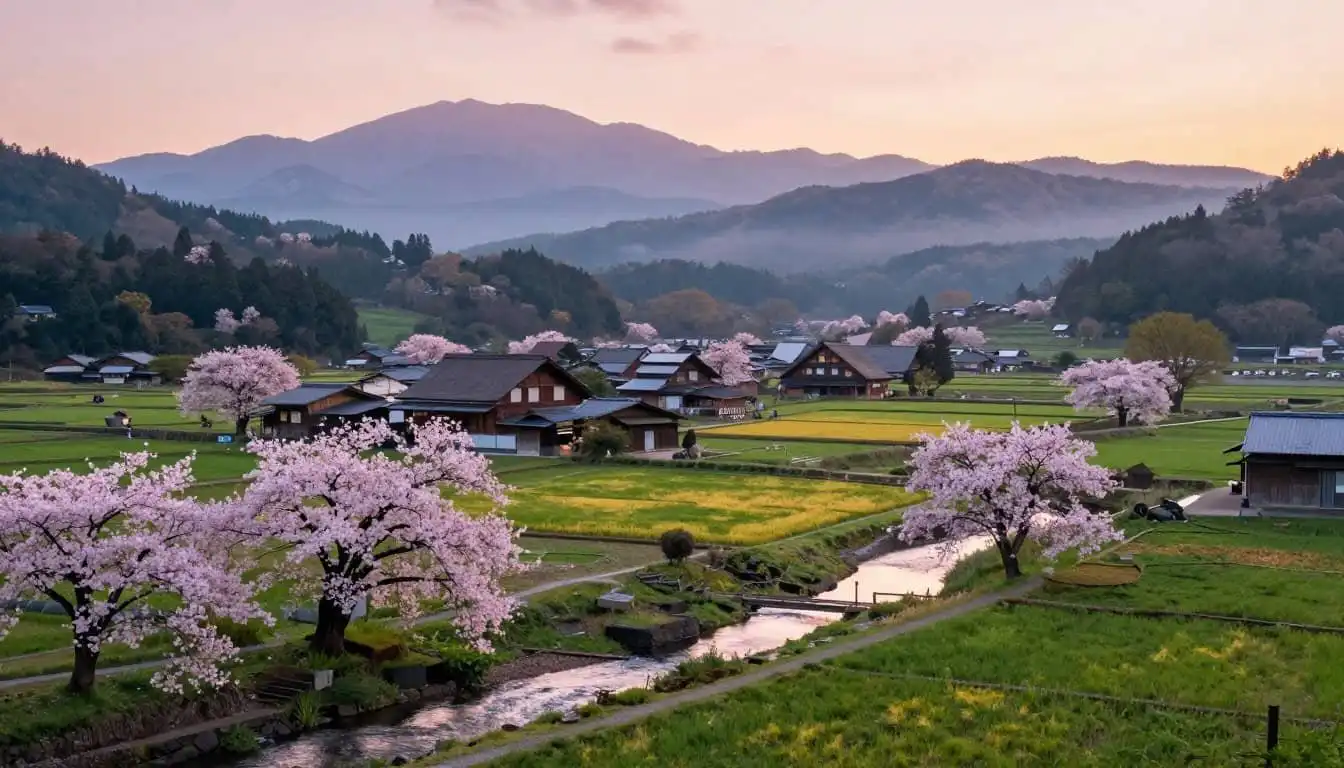

As we leave the busy streets of Kyoto behind, we find a peaceful countryside. It shows the true beauty of rural tranquility. The Kyoto countryside is full of traditional views, small villages, and cultural spots to discover.
Our trip to this magical area will show you secret spots, local events, and stunning nature. It’s a detailed Kyoto travel guide for those wanting a real experience.
Key Takeaways
- Discover the serene landscapes of Kyoto’s countryside.
- Explore traditional villages and cultural experiences.
- Uncover hidden gems and local festivals.
- Enjoy breathtaking natural beauty.
- Use our guide for an authentic Kyoto travel experience.
The Hidden Beauty Beyond Kyoto City
Outside Kyoto City’s busy streets, a peaceful world awaits. The city is famous for its temples, gardens, and culture. But the countryside offers a unique beauty that’s yet to be seen.
What Makes Rural Kyoto Special
Rural Kyoto is known for its natural beauty. It has rolling hills, lush forests, and calm rivers. Traditional villages here let visitors see rural Japan’s true culture.
Guests can try local food, join in festivals, and stay in traditional homes. This gives a peek into the area’s rich history.
| Aspect | Rural Kyoto | Kyoto City |
|---|---|---|
| Nature | Rolling hills, forests, and rivers | Urban parks and gardens |
| Culture | Traditional villages and festivals | Temples, museums, and cultural events |
| Experience | Authentic rural life, local cuisine | Urban lifestyle, modern amenities |
City vs. Countryside Experience
Visiting Kyoto City is different from the countryside. The city is fast-paced with modern life and cultural spots. But the countryside offers a calm, real experience.
In rural Kyoto, you can enjoy farm-to-table cuisine. You can also try traditional crafts and feel the warmth of rural communities.
Best Time to Visit Kyoto’s Rural Outskirts, Japan
Looking for cherry blossoms or winter landscapes? Kyoto’s countryside has it all. Its natural beauty is a big draw all year round.
Spring Cherry Blossoms and Summer Greenery
Spring is a great time for Kyoto’s countryside. The sakura (cherry blossoms) bloom in late March to early April. Summer, from June to July, offers lush greenery perfect for hiking.
Fall Foliage and Winter Snow Scenes
Autumn brings vibrant colors from mid-November to mid-December. Winter turns the area into a peaceful scene, great for photos and quiet moments.
Avoiding Crowds and Peak Tourist Seasons
To dodge the crowds, visit during the shoulder season. Late April to early June or September to mid-November are good times. Here’s a table with the best visit times:
| Season | Best Time | Highlights |
|---|---|---|
| Spring | Late March to early April | Cherry blossoms |
| Summer | June to July | Lush greenery, hiking |
| Autumn | Mid-November to mid-December | Fall foliage |
| Winter | December to February | Snow scenes, serene landscapes |
Planning Your Countryside Adventure
To enjoy our countryside adventure in Kyoto, we need a good plan. A well-made itinerary helps us explore rural areas well. It also makes sure we see all the hidden gems Kyoto offers.
Creating an Itinerary for Rural Exploration
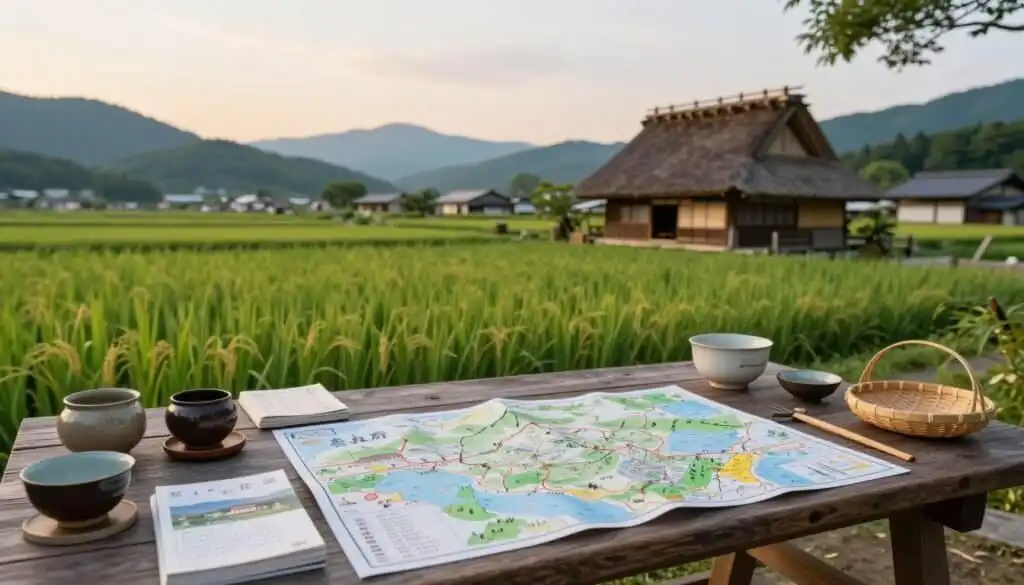
When planning our rural Kyoto trip, think about travel times and leave room for flexibility. First, list the places we want to see, like scenic villages and historic temples. Prioritizing our interests helps us use our time wisely. For example, nature lovers might want to visit the Arashiyama Bamboo Grove or the Philosopher’s Path.
Essential Items to Pack for Countryside Travel
Packing the right things is key for a great countryside trip. We should bring comfortable walking shoes for walking on uneven paths. Don’t forget water, snacks, a map or GPS, and a camera for the views. Also, pack a portable charger since power might be scarce in rural spots.
With a good plan and the right gear, our Kyoto countryside trip will be smooth and fun. These countryside travel tips will help us start our rural adventure.
Transportation Options to Rural Kyoto
To explore Kyoto’s countryside, knowing your transport choices is key. Rural Kyoto is easy to reach without a car, thanks to various transport options.
Trains and Buses from Kyoto Station
The best way to get to rural Kyoto is by train and bus from Kyoto Station. JR trains, Keihan, and Kintetsu railways connect to many rural spots. For instance, the JR Sagano Line takes you to Arashiyama, a scenic area near Kyoto.
- JR Sagano Line: Connects Kyoto Station to Arashiyama
- Keihan Railway: Links Kyoto to rural areas like Uji and Otsu
- Kintetsu Railway: Offers routes to rural areas like Kurama and Kibune
Renting Bicycles and Cars
Renting a bike or car gives you more freedom. Many rural spots have bike rentals, and Kyoto City has car rental services. Renting a car is great for exploring distant areas not covered by public transport.
- Flexibility to create your own itinerary
- Access to remote areas not served by public transportation
Using Transportation Apps and Passes
Use apps like Google Maps or Hyperdia to plan your trip. Also, buying a Kansai Area Pass or a Kyoto City Bus One-Day Pass can save money and make travel easier.
Understanding your transport options ensures a smooth trip to rural Kyoto.
Where to Stay in Kyoto’s Countryside
Accommodations in Kyoto’s countryside offer more than just a place to stay. They give a real look into local life. You can find traditional ryokans and farm stays, each with its own charm.
Traditional Ryokans and Minshuku Experiences
Staying in a traditional ryokan or minshuku is a true Japanese experience. These places have tatami-mat rooms, futon beds, and shared baths. They let guests dive into traditional Japanese culture.
Many ryokans are set in peaceful natural spots. They offer a calm escape from city life. Guests can try local food and join in on activities like tea ceremonies.
| Accommodation Type | Features | Price Range |
|---|---|---|
| Ryokan | Tatami rooms, futon beds, communal baths | $100-$300 per night |
| Minshuku | Family-run, home-cooked meals, cozy atmosphere | $80-$250 per night |
Farm Stays and Rural Guesthouses
Farm stays and rural guesthouses offer a rustic experience. They let visitors help with farm work, like harvesting and animal care. This gives a real feel for rural life.
Many farm stays serve meals made from fresh, local ingredients. Guests can enjoy the quiet countryside. They can try gardening or cooking traditional dishes.
Choosing to stay in Kyoto’s countryside is a unique and authentic experience. It combines natural beauty with cultural richness.
Exploring Arashiyama and Sagano
As we explore Kyoto, Arashiyama and Sagano shine with their stunning beauty and deep history. These areas on Kyoto’s west offer a mix of nature and culture. They are a top spot for anyone visiting.
Navigating the Bamboo Groves and Monkey Park
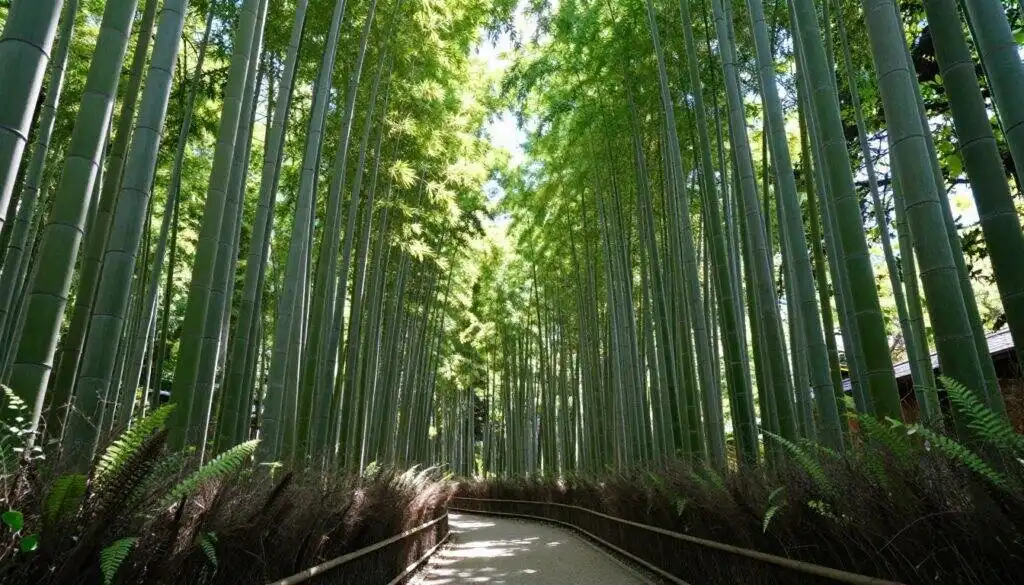
The bamboo grove in Arashiyama is a highlight. It’s a peaceful place with tall bamboo that moves in the breeze. Walking here, you can enjoy the calm and see the beauty of nature.
Next to the grove, the Arashiyama Monkey Park is a special place. It’s where Japanese macaques live. Here, you can see these monkeys up close and even feed them with help from the park staff.
Discovering Hidden Temples and Gardens
Arashiyama and Sagano also have many temples and gardens. The Tenryu-ji Temple is a UNESCO site known for its garden and pond. It’s a peaceful place for thinking and enjoying nature.
Don’t miss the Kiyomizu-dera Temple, even though it’s in Higashiyama ward. The temples and gardens in Arashiyama and Sagano are full of history and culture. They are unforgettable experiences.
Discovering the Charm of Northern Kyoto
As we explore beyond Kyoto’s city limits, Northern Kyoto reveals its serene beauty. It’s filled with natural landscapes and traditional villages. This area is a treasure trove of beauty, culture, and spiritual experiences. It’s perfect for those looking for a peaceful and genuine Kyoto experience.
Day Trip to Kurama and Kibune Villages
A day trip to Kurama and Kibune villages is a must in Northern Kyoto. Kurama is famous for its natural hot springs and the Kurama Temple. Visitors can soak in the hot springs or explore the temple’s history.
Kibune is known for its beautiful scenery and traditional ryokans. Guests can enjoy a peaceful meal by the river in these ryokans.
Hiking Trails and Natural Hot Springs
Northern Kyoto is a hiker’s dream, with trails offering stunning views. The Kurama to Kibune hiking trail is a favorite. It connects these two villages with a scenic path.
After hiking, visitors can relax in the region’s natural hot springs. It’s a great way to unwind and refresh.
The Scenic Beauty of Eastern Kyoto
As we explore Eastern Kyoto, we find a world of calm and beauty. This area is known for its stunning landscapes, old temples, and traditional villages.
Exploring Ohara’s Rural Landscapes
Ohara is a quaint rural spot famous for its beauty and traditional life. Visitors can hike through its lovely valleys and villages. It’s a real taste of rural Japan.
The Sanctuary of the Three Lights is a highlight here. It’s a group of temples for the Buddhist deity, Kannon. The temples are set in beautiful gardens, perfect for quiet thought.
Visiting Temples and Gardens in Shugakuin
Shugakuin is where you’ll find the Shugakuin Imperial Villa, a UNESCO site. It’s known for its stunning gardens and traditional buildings. The villa showcases Japan’s garden design, with ponds, paths, and seasonal plants.
| Location | Main Attraction | Best Time to Visit |
|---|---|---|
| Ohara | Rural landscapes and traditional villages | Spring and Autumn |
| Shugakuin | Imperial Villa and gardens | Anytime, but best during cherry blossom season |
As a traveler once said,
“The serene landscapes and historical significance of Eastern Kyoto make it a must-visit destination for anyone looking to experience the authentic Japan.”
In summary, Eastern Kyoto is a mix of natural beauty, culture, and peace. It’s perfect for those wanting to get away from city life.
Immersive Cultural Experiences in Rural Kyoto
Exploring rural Kyoto opens a world of cultural experiences. Here, visitors can dive into traditional Japanese culture. They can join craft workshops, experience farming, and enjoy peaceful tea ceremonies.
Participating in Traditional Craft Workshops
Traditional craft workshops let visitors get hands-on. They learn Japanese craftsmanship, like woodblock printing and pottery. They can even make their own souvenirs to take home.
Joining Agricultural Experiences and Farm Visits
Agricultural experiences and farm visits connect visitors with the land. Farm stays and workshops teach about sustainable farming and community in rural Kyoto.
| Experience | Location | Duration |
|---|---|---|
| Traditional Craft Workshop | Nantan City | Half-day |
| Farm Stay | Kyoto Prefecture | 1-3 days |
| Tea Ceremony | Ohara Region | 1-2 hours |
Attending Tea Ceremonies in the Countryside
Tea ceremonies in rural Kyoto are peaceful. They let participants enjoy the calm of nature.

These ceremonies show Kyoto’s cultural heritage, focusing on mindfulness and respect for nature.
Culinary Delights of Kyoto’s Countryside
The rural areas of Kyoto offer a wide range of culinary delights. Here, you can enjoy farm-to-table dining and seasonal specialties. The countryside is known for its fresh produce and traditional cooking methods.
Farm-to-Table Dining Experiences
Farm-to-table dining is a big highlight in Kyoto’s countryside. Meals are made with the freshest ingredients from local farms. Restaurants like Kaiseki Ryori serve multi-course meals that highlight the best of the season.
Visitors can enjoy these authentic dining experiences in a peaceful, natural setting.
Seasonal Specialties and Where to Try Them
Kyoto’s countryside is famous for its seasonal specialties. In spring, try the Sakura Mochi in Arashiyama. Summer brings refreshing ayu (sweetfish) dishes.
Autumn is the time for kuri (chestnut) delicacies. Winter offers hearty nabe (hot pot) meals. Local restaurants and roadside stalls are the best places to try these seasonal treats.
Cooking Classes Using Local Ingredients
For a hands-on culinary experience, join a cooking class. You can learn to prepare traditional Kyoto dishes using local ingredients. Classes often focus on seasonal produce, teaching you how to create authentic meals like obanzai (Kyoto-style home cooking).
Navigating Language and Cultural Differences
Exploring the countryside of Kyoto requires understanding local customs and language. Knowing and respecting rural Kyoto’s cultural nuances can greatly improve your trip. It also helps you connect better with the local community.
Essential Japanese Phrases for Rural Travel
Learning key Japanese phrases can make your trip to rural Kyoto more fun. Saying “konnichiwa” (hello), “arigatou” (thank you), and “sumimasen” (excuse me) shows respect. You can also use a phrasebook or a translation app on your phone.
Respectful Etiquette in Countryside Communities
Being respectful is key when meeting locals in rural Kyoto. Dress modestly and follow local traditions when visiting temples or attending events. Bowing is a common greeting, and a slight bow shows respect. Being aware of these customs helps you move through rural Kyoto with grace.
Conclusion: Embracing the Tranquil Spirit of Rural Kyoto
As we wrap up our journey in Kyoto’s countryside, we remember the special moments we’ve had. The countryside of Kyoto is peaceful and full of tradition. It’s a place where the city’s noise fades away.
We’ve seen beautiful bamboo groves, quaint villages, and old temples. These sights show the area’s natural beauty and cultural depth. We’ve also tried local foods and crafts, diving deep into rural Kyoto’s true essence.
When you visit Kyoto’s countryside, take time to enjoy its calm. Let the peaceful surroundings refresh you. Whether you’re walking in the hills or having tea in a traditional house, Kyoto’s countryside will touch your heart.
FAQ
What is the best time to visit Kyoto’s countryside?
Spring (March to May) is great for cherry blossoms and nice weather. Autumn (September to November) offers beautiful foliage and comfortable temps.
How do I get to rural Kyoto?
Trains or buses from Kyoto Station will get you there. Renting bicycles or cars gives you more freedom.
What are the must-try local specialties in Kyoto’s countryside?
Try yudofu (boiled tofu), shojin-ryori (Buddhist vegetarian food), and fresh local produce.
Can I participate in traditional craft workshops in rural Kyoto?
Yes, you can learn crafts like woodcarving, pottery, and weaving at various workshops.
What are the essential items to pack for a countryside trip?
Pack comfy shoes, layers for weather changes, and a camera for the views.
Are there any cultural etiquette tips I should be aware of when visiting rural Kyoto?
Yes, respect local customs like removing shoes indoors and using polite language with locals.
Can I stay overnight in rural Kyoto?
Yes, stay in traditional ryokans, minshuku, or farm stays for a true local experience.
How do I navigate the countryside without speaking Japanese?
Use translation apps, carry a phrasebook, and ask locals for help when needed.
What are some popular day-trip destinations in Kyoto’s countryside?
Visit Kurama and Kibune villages, Ohara, and Shugakuin for their beauty, culture, and unique experiences.