
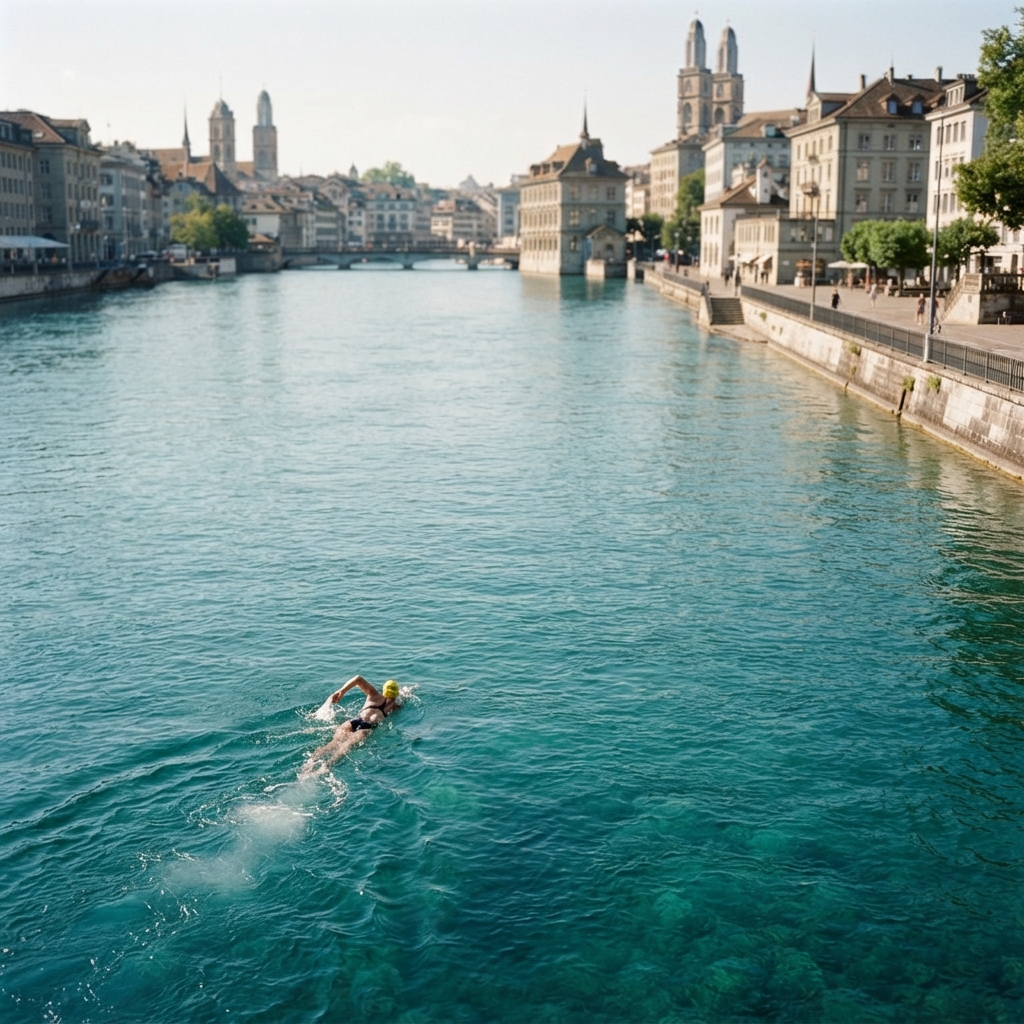

Urban swimming has transformed from a quirky local habit into a defining feature of modern city life. Across the globe, municipal authorities and community groups have worked to clean up local waterways, turning industrial drains and historic ports into pristine swimming zones. This movement lets residents and visitors alike dive into nature without leaving the concrete jungle behind. From alpine lakes fed by melting glaciers to historic ocean pools, swimming in a major metropolis offers a unique lens through which to experience a destination. The appeal lies in the contrast: the rumble of urban transit fades the moment you push off from the shore and feel the cool current of a clean river or the expansive blue of an alpine basin. When you explore destinations that champion aquatic access, you find cities where swimming is a fundamental part of the daily routine rather than a rare weekend treat.
Swimming in Lake Geneva and the Waters of Geneva
Geneva stands out as a prime destination for urban bathers who prefer sprawling lake expanses. The canton of Geneva lists about 30 bathing sites on Lake Geneva, the Rhône, and other local waterways, giving swimmers plenty of options to cool off during warm months. Water quality at these sites is monitored closely, with testing carried out every three to four weeks from April to September to check for bacteria like E. coli and enterococci, as detailed by the canton in official documentation on Geneva swimming sites. Lake Geneva itself covers 580.1 square kilometers, reaches a maximum depth of 309.7 meters, and is shared by Switzerland and France, creating a vast and majestic aquatic playground right at the edge of the city.
Accessing the water in Geneva is remarkably straightforward. Popular spots like the Bains des Pâquis offer a social hub where locals gather for a swim, a fondue, or a sauna, blending urban culture with lake life seamlessly. However, safety remains a priority for local authorities. The canton advises waiting 48 hours after storms, strong winds, or heavy rain before swimming in the lake or the Rhône. This waiting period allows runoff to clear and prevents disturbed lake sediments from affecting bacteriological quality. Swimmers who respect these natural rhythms enjoy some of the cleanest and most refreshing urban lake waters in Europe, framed by distant peaks and the iconic city skyline.
Floating Down the Aare River in Bern
Moving eastward across Switzerland brings you to Bern, where river swimming is not merely a pastime but a cultural institution. Bern’s tourism authority describes river swimming as a routine summer activity, encompassing everything from quick, short dips to longer downstream journeys and intense after-work exercise sessions, as highlighted in the Bern Aare river guide. The Aare River flows with striking clarity and a brisk current, carving a horseshoe bend around the medieval old town. This makes it possible to enter the water upstream at spots like the Marzili lido and drift for kilometers alongside parliament buildings and historic bridges before stepping out onto the grassy banks.
Because the Aare moves swiftly, safety education is a major focus for the city. Bern actively promotes the Aare You Safe campaign, which provides safety advice, behavioural rules, emergency information, and an official Aare map to help both residents and tourists follow the current safely. Locals treat the river like an aquatic highway, packing their clothes into waterproof bright orange or red bags known as Wickelfisch, which float alongside them as they swim. This accessory allows swimmers to enter the water at one point, drift downstream, and walk back through the city streets in dry clothes. The combination of pristine water quality, urban transit access, and a supportive community makes Bern a standard for river swimming.
Training at Bondi Icebergs in Sydney
While European cities lean heavily into river and lake restoration, coastal metropolises offer their own dramatic take on urban swimming. Sydney, Australia, boasts a coastline defined by golden beaches and dramatic cliffs, yet one specific spot captures the imagination of swimmers worldwide. The Bondi Icebergs Club opened in 1929 as a winter swimming club for lifeguards seeking year-round training, establishing a tradition that continues to draw crowds today. Perched directly above the crashing waves of the Tasman Sea, the historic pool allows swimmers to experience the raw power of the ocean while swimming laps in a controlled 50-meter saltwater environment.
The appeal of Bondi Icebergs lies in the sensory experience of the location. As ocean swells break against the outer wall, sea spray frequently splashes over the lanes, refreshing swimmers as they complete their workouts. The club requires members to swim on three out of every four Sundays during the winter season to maintain their membership, fostering a dedicated community of hardy athletes. For visitors, paying a modest entry fee grants access to the pool, the sauna, and sweeping views of Bondi Beach. It represents a masterclass in coastal urban design, blending gritty athletic tradition with world-class scenery.
Harbour Swimming at Islands Brygge in Copenhagen
Copenhagen offers a narrative of industrial transformation and urban reclamation. Islands Brygge is cited as a prime example of a swimmable urban harbour in official policy evidence regarding clean waterways, as documented in the London urban swimming study. Decades ago, the inner harbour of the Danish capital was polluted by industrial runoff and sewage. Through water treatment initiatives, environmental regulations, and the establishment of wastewater management systems, the city cleaned the harbour to swimming standards.
Today, the harbour baths at Islands Brygge feature multiple pools, including children’s areas and deep diving zones, all floating in the middle of a maritime shipping lane. Water quality is monitored continuously, and if heavy rains cause overflow, automated warning systems alert the public instantly. On warm summer days, the wooden boardwalks fill with swimmers, sunbathers, and families enjoying the water. It proves that heavy industrial ports can be returned to the public, turning urban waterfronts into community hubs where swimming alongside commuter ferries and kayaks is an everyday reality.
Exploring the Isar River in Munich

Germany’s southern cultural capital provides a model for integrating natural waterways into urban life. Munich’s tourism authority identifies the Flaucher riverbank area in Thalkirchen as a place to enter the Isar, with river meadows used for bathing, picnicking, and recreation, as outlined in the Munich swimming and lakes guide. The Isar flows straight out of the Bavarian Alps, bringing cold, clear mountain water directly through the city. Restoration projects over the past two decades removed concrete artificial banks, allowing the river to reclaim a natural, braided course with gravel bars and shallow wading areas.
Getting to this aquatic area is easy for visitors. The Flaucher area is approximately a 30-minute bicycle ride from Marienplatz, the central square of Munich, making it accessible via the city network of bike paths. For those using public transit, U-Bahn line U3 serves nearby Thalkirchen station, from which a short walk through parks brings you directly to the riverbanks. Locals and visitors gather here to float on inner tubes, wade in the shallow gravel channels, or relax under the shade of mature trees, proving that a major German city can maintain a wild river system in its backyard.
Comparing Urban Swimming Cultures Around the World
Each of these cities approaches urban swimming through a distinct cultural and geographic lens, yet they all share a common commitment to water quality and public access. Geneva and Munich rely heavily on their proximity to alpine geography, drawing water from melting snowpacks and mountain ranges that naturally filter and cool the aquatic environments. Bern and Copenhagen focus on engineering triumphs, transforming fast-flowing rivers and industrial harbors into safe, highly regulated municipal spaces where citizens can reclaim their waterfronts. Meanwhile, Sydney leans into marine resilience, using ocean pools to tame wild coastal waters into manageable training grounds.
The economic and social benefits of these urban swimming spots extend far beyond basic recreation. Cities that invest in clean water infrastructure and accessible bathing areas often see increased property values, heightened civic pride, and improved mental and physical health among residents. Swimming in a public river or lake breaks down social barriers, bringing together people from all walks of life in a shared, low-cost activity. Whether you are navigating the swift currents of the Aare or lounging by the docks of Copenhagen Harbour, the experience reminds us that urban centers do not have to be disconnected from the natural world.
Practical Tips for Safe Urban Swimming
Before jumping into any urban river, lake, or harbor, taking a few precautions ensures a safe and enjoyable experience. Water conditions in natural settings can change rapidly due to weather events, boat traffic, and seasonal temperatures. Here are several practical guidelines to keep in mind when swimming in major cities:
- Check local water quality reports and municipal websites daily, especially following heavy rainfall or storms that may trigger runoff warnings.
- Understand the local currents and water velocity before entering rivers like the Aare or the Isar; use designated entry and exit points to avoid getting swept past your destination.
- Wear bright swim caps or use tow floats, particularly in busy waterways shared with commercial boats, ferries, or heavy paddleboard traffic.
- Acclimate slowly to the water temperature, as alpine-fed lakes and rivers like Lake Geneva and the Isar can remain surprisingly cold even during peak summer months.
- Respect local bylaws regarding swimming zones, restricted shipping lanes, and prohibited areas to ensure harmony with other river and lake users.
Adhering to these simple rules helps protect both your personal safety and the ongoing efforts of municipalities to keep these aquatic spaces open and clean. Urban swimming thrives on mutual respect between city dwellers, environmental agencies, and water sports enthusiasts.
Frequently Asked Questions
Is it safe to swim in Lake Geneva in Geneva?

Yes, swimming in Lake Geneva is generally very safe and popular during the summer months. The canton monitors water quality at roughly 30 official bathing sites every three to four weeks between April and September. However, authorities recommend waiting 48 hours after heavy storms or strong winds to let runoff clear and ensure optimal bacteriological safety.
How do swimmers manage the strong current in the Aare River in Bern?
Swimmers in Bern typically enter the river at designated spots like the Marzili lido and drift downstream with the current. Because the river moves quickly, experienced locals use waterproof floating bags called Wickelfisch to carry their clothes. Swimmers must know where to exit the water before jumping in and follow safety guidelines provided by the local Aare You Safe campaign.
Do you need to pay to swim at Bondi Icebergs in Sydney?
Yes, Bondi Icebergs is a private club facility, but it welcomes casual visitors and lap swimmers for a modest admission fee. This fee grants access to the historic 50-meter saltwater pool, the surrounding sundeck, and the sauna facilities, offering a front-row seat to the crashing waves of the Tasman Sea.
How was the harbor water in Copenhagen cleaned up for swimming?
The clean-up of Copenhagen’s inner harbor at Islands Brygge was achieved through massive investments in wastewater treatment plants, strict controls on industrial discharge, and the implementation of real-time monitoring systems that track bacteria levels and automatically alert the public to any temporary runoff issues.
How do you get to the Flaucher swimming area on the Isar River in Munich?
The Flaucher area in Thalkirchen is easily reached via Munich’s efficient public transit and cycling networks. You can take U-Bahn line U3 to Thalkirchen station and walk through the park, or enjoy a scenic 30-minute bicycle ride from Marienplatz straight to the riverbanks along dedicated bike paths.
As urban centers prioritize sustainability and public health, the global movement for swimmable cities expands. Urban planners recognize that clean, accessible water is a component of a livable city, turning neglected industrial waterfronts and alpine rivers into recreational corridors. Whether you seek the tranquility of an alpine lake, the speed of a swift river drift, or the splash of ocean waves against a historic sea pool, these five destinations prove that nature and urban life coexist. By protecting water quality and supporting outdoor recreation, Geneva, Bern, Sydney, Copenhagen, and Munich offer examples for cities worldwide to reconnect with their aquatic roots.
As more metropolises look to revitalize their waterfronts, the success stories of these cities serve as motivation. Clean water policies, testing, and community-driven initiatives help to reshape the urban area, ensuring that future generations can enjoy the simple pleasure of a swim in the heart of the metropolis.
As urban centers prioritize sustainability and public health, the global movement for swimmable cities expands. Urban planners recognize that clean, accessible water is a component of a livable city, turning neglected industrial waterfronts and alpine rivers into recreational corridors. Whether you seek the tranquility of an alpine lake, the speed of a swift river drift, or the splash of ocean waves against a historic sea pool, these five destinations prove that nature and urban life coexist. By protecting water quality and supporting outdoor recreation, Geneva, Bern, Sydney, Copenhagen, and Munich offer examples for cities worldwide to reconnect with their aquatic roots. As more metropolises look to revitalize their waterfronts, the success stories of these cities serve as motivation. Clean water policies, testing, and community-driven initiatives help to reshape the urban area, ensuring that future generations can enjoy the simple pleasure of a swim in the heart of the metropolis.