
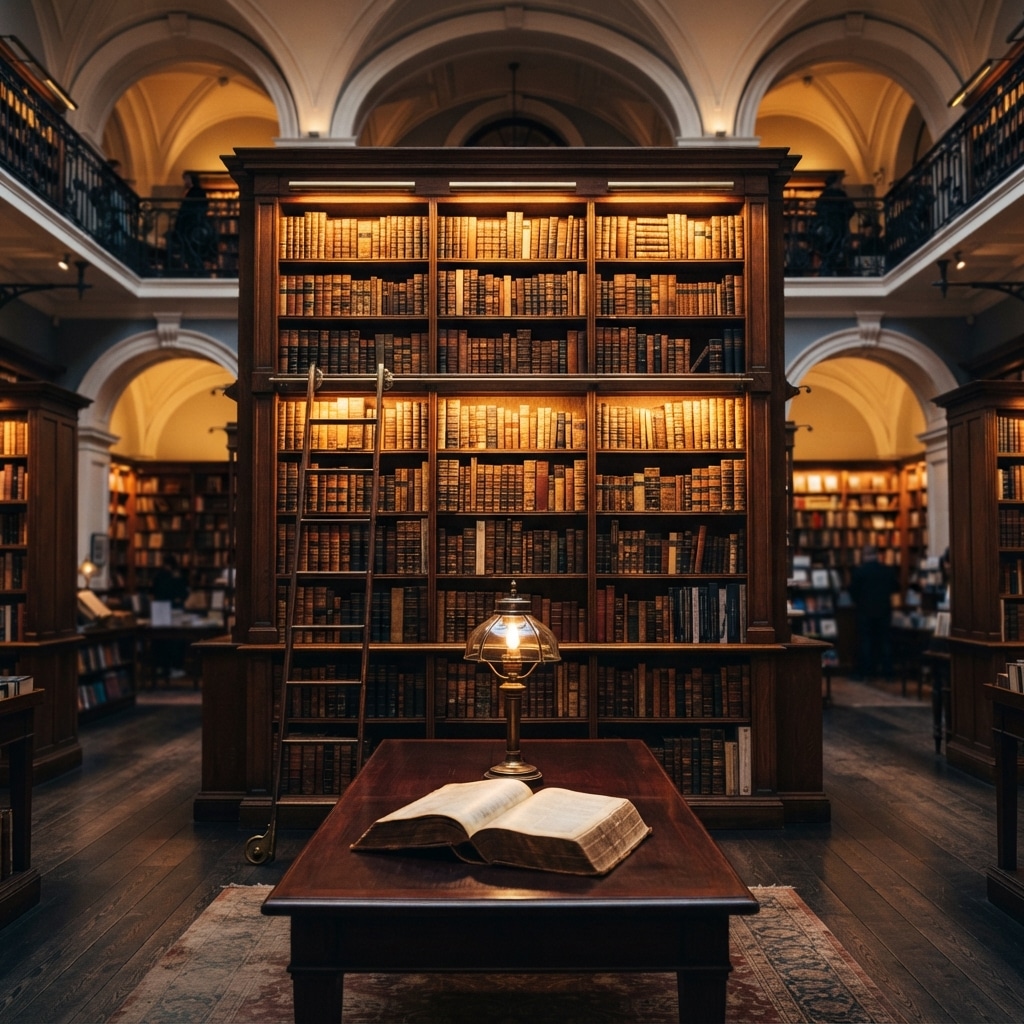

Bookstores serve as cultural anchors in cities around the world, offering physical spaces where readers can browse thousands of volumes, attend author readings, and discover rare editions. Across different continents, a select few literary institutions have gained international renown for their striking architectural designs, unique preservation methods, or long-standing literary histories. From the winding streets of Porto to the historic canals of Venice, these shops function as community hubs and architectural landmarks. Readers who travel to Porto, Paris, Buenos Aires, Venice, and Medellín will find independent shops and grand former theaters that celebrate the printed word in unique ways.
Architectural Grandeur at Livraria Lello in Porto
Opened on 13 January 1906 at Rua das Carmelitas 144, Livraria Lello stands as one of Portugal’s most famous literary landmarks. The building was designed by architect Francisco Xavier Esteves, who combined Neo-Gothic and Art Nouveau architectural styles to create a detailed interior featuring carved plasterwork painted to resemble wood, a large stained-glass skylight, and a sculptural red staircase that curves toward the upper floor.
The stained-glass skylight bears the Latin word “Decus,” reflecting the artistic ambitions of the founders. Over the decades, the shop has welcomed millions of visitors drawn to its distinctive interior. A major restoration project concluded in 2018, repairing historical details and ensuring the preservation of the intricate woodwork and stained glass.
While pop-culture lore often associates the shop with J.K. Rowling’s time living and working in Porto, the official history hosted on the Livraria Lello about page does not claim that the shop inspired the Harry Potter series. Rowling did live in Porto during the early 1990s and frequented local cafés, but the architectural splendor of the bookstore alone is enough to draw crowds without relying on literary mythology. Today, visitors queue along Rua das Carmelitas to step inside and view the ornate shelves that house both Portuguese and international literature.
Historic Bohemia at Shakespeare and Company in Paris
Located at 37 rue de la Bûcherie, directly opposite Notre-Dame Cathedral, Shakespeare and Company operates as a legendary hub for English-language literature in France. The establishment was founded by George Whitman in 1951, initially under the name Le Mistral. In April 1964, Whitman renamed the shop to honor Sylvia Beach’s original Paris bookstore, which had opened in 1919.
The original Shakespeare and Company, located at 12 rue de l’Odéon under Sylvia Beach, played a foundational role in modernist literature by publishing James Joyce’s Ulysses in 1922. Although Whitman’s shop on the left bank is a separate enterprise from Beach’s historic venue, it carried on the tradition of welcoming wandering writers. Over the decades, the second-floor rooms of Whitman’s shop have hosted hundreds of aspiring authors, poets, and artists, who exchanged labor for lodging among the stacks.
Detailed accounts of these decades can be found in the Shakespeare and Company history archive. The shop remains packed with floor-to-ceiling shelves, narrow corridors, and reading nooks that overlook the Seine, maintaining its reputation as a gathering place for readers and writers visiting the French capital.
Theater Turned Temple of Literature: El Ateneo Grand Splendid in Buenos Aires
Transforming civic and cultural buildings into retail spaces offers a second life for urban architecture, a process vividly demonstrated by El Ateneo Grand Splendid in Buenos Aires. Located on Santa Fe Avenue, the bookstore occupies a former theater building that originally opened on 4 December 2000 as a bookshop, though the building itself dates back to the early twentieth century.
The grand theater first opened its doors in 1919, serving as a venue for ballet, opera, cinema, and radio broadcasts during the golden age of Argentine entertainment. The interior retains the original theater boxes, curved balconies, ornate theatrical lighting, and red velvet stage curtains. The ceiling fresco, painted by Italian artist Nazareno Orlandi in 1919, depicts an allegory of peace.
Visitors walk across the former auditorium floor, now lined with bookshelves organized by genre, while the stage has been converted into a cafe where patrons can sit and read under the theater lights. The history of this grand venue is documented on the Buenos Aires Tourism official site. It remains one of the largest and most visually arresting bookstores in South America.
Floating Volumes at Libreria Acqua Alta in Venice
Rising water levels present unique challenges for businesses situated in historic canal cities, a reality that shapes the daily operations of Libreria Acqua Alta in Venice. Founded by Luigi Frizzo in 2002, the shop sits along a canal and is famous for storing its inventory inside unconventional vessels to protect the stock from rising tides.
Because high tides frequently flood the streets of Venice, Frizzo placed books inside waterproof gondolas, old bathtubs, canoes, and waterproof bins. In the courtyard, a staircase constructed from discarded, water-damaged books leads up to a view of the canal, serving as a popular spot for visitors to take photographs.
The shop faced significant destruction during the exceptional flooding of 12 to 13 November 2019, which submerged large portions of Venice. Despite the damage, the bookstore recovered, adapting its protective measures and cementing its status as an eccentric Venetian institution. Details regarding the store’s layout and recovery efforts are outlined on the Libreria Acqua Alta official site. Friendly resident cats often lounge on top of the book piles, adding to the informal atmosphere of this canal-side shop.
Expanding Literary Horizons at Medellín’s 9 3⁄4 Bookstore
Urban renewal projects in South America have often integrated cultural spaces into community development plans. In Medellín, independent bookstores contribute to the city’s literary culture by offering welcoming environments for local readers and travelers alike.
While neighborhood bookshops across the city host poetry readings, book clubs, and children’s storytelling hours, independent spaces like the 9 3⁄4 Bookstore reflect the creative spirit of contemporary urban design. These shops curate diverse selections of Spanish-language literature, graphic novels, and translated works, providing quiet spaces for study and conversation amid the active urban environment of the Aburrá Valley.
Navigating International Literary Tourism

Visiting these global bookstores requires planning, as many have implemented ticketing systems or visitor caps to manage foot traffic. Livraria Lello, for instance, introduced an admission fee that can be redeemed toward the purchase of a book, helping manage the large crowds arriving daily. Similarly, Shakespeare and Company often experiences queues along rue de la Bûcherie, particularly during peak tourist seasons in the spring and summer.
Travelers interested in architecture will find that El Ateneo Grand Splendid and Livraria Lello offer direct examples of how civic and commercial spaces evolve over time. Meanwhile, smaller independent stores like Libreria Acqua Alta and Shakespeare and Company emphasize community engagement, eclectic stocking practices, and historical continuity.
The Cultural Impact of Independent Bookselling
Independent bookstores function as cultural anchors that support local authors, host public lectures, and preserve physical print media in an increasingly digital world. While online retailers offer convenience, physical bookstores provide tangible discovery through accidental browsing, staff recommendations, and tactile engagement with book design, paper quality, and typography.
Cities that invest in preserving historic commercial spaces help maintain architectural diversity. Whether through municipal efforts like the preservation of theater architecture in Buenos Aires or private initiatives to maintain Neo-Gothic woodwork in Porto, these buildings connect modern urban populations with the design traditions of the past.
Readers planning an international itinerary can combine visits to these five locations with stops at municipal libraries, literary museums, and historic printing presses. Each destination offers a distinct perspective on how global communities value and protect literature.
Frequently Asked Questions
When did Livraria Lello open in Porto?
Livraria Lello opened on 13 January 1906 at Rua das Carmelitas 144 in Porto, Portugal.
Did J.K. Rowling inspire the Harry Potter series at Livraria Lello?
The official history of Livraria Lello does not claim that the bookstore inspired the Harry Potter series, though author J.K. Rowling did live in Porto during the early 1990s.
When was Shakespeare and Company founded in Paris?
The Paris bookstore was founded by George Whitman in 1951 as Le Mistral and was renamed Shakespeare and Company in April 1964.
What was El Ateneo Grand Splendid before it became a bookstore?
El Ateneo Grand Splendid was originally a theater that opened in 1919, hosting ballet, opera, cinema, and radio broadcasts before converting into a bookstore in December 2000.
How does Libreria Acqua Alta protect its books from floods?
Libreria Acqua Alta stores its books inside waterproof gondolas, bathtubs, canoes, and bins to prevent damage from the frequent high tides that affect Venice.
Practical Tips for Visiting International Bookstores
Planning a literary tour across multiple continents requires balancing museum-like ticketing systems with the spontaneous nature of browsing independent shelves. Because these five destinations range from major tourist magnets to neighborhood hubs, understanding their daily routines helps travelers make the most of their visits.
At Livraria Lello in Porto, anticipation is high year-round. To manage the steady stream of architecture enthusiasts and book lovers, the shop requires visitors to purchase a voucher or ticket prior to entry. The clever aspect of this system is that the voucher fee is deducted from the price of any book purchased during the visit. To beat the heaviest crowds, aim to arrive right when the doors open in the morning or during the late afternoon lull. Keep in mind that photography guidelines can change depending on crowd density, so always follow current staff instructions while admiring the carved plasterwork and red staircase.
In Paris, Shakespeare and Company operates on a more traditional drop-in basis, though popularity means you will likely encounter a queue on rue de la Bûcherie, especially during weekend afternoons. If you want to browse the floor-to-ceiling shelves, thumb through poetry chapbooks, or peek into the second-floor reading rooms without waiting in a long line, weekday mornings are your best bet. Remember to respect the quiet zones where writers and readers concentrate, and take time to browse the outdoor cart displays facing the Seine.
El Ateneo Grand Splendid in Buenos Aires offers a remarkably relaxed experience compared to its European counterparts. Because of its generous scale inside the former theater auditorium, visitors rarely feel rushed. You can spend hours wandering through the concentric circles of bookshelves, riding the escalator up to inspect the ornate theater boxes, and eventually settling into the cafe located on the former stage. No special booking is required, making it an easy stop to integrate into an afternoon stroll down Santa Fe Avenue.
Visiting Libreria Acqua Alta in Venice calls for patience and a sense of adventure. Because the shop is packed with an eclectic, disorganized inventory tucked into gondolas and bathtubs, browsing is an entirely tactile, exploratory experience. Check local tide forecasts before you go; if an exceptionally high tide is predicted, the staff will have elevated vulnerable stock, but you may still encounter damp floorboards. Wear comfortable walking shoes to walk through the narrow passageways and step carefully out into the courtyard to see the famous book staircase.
Building Your Global Reading List
Before embarking on a journey to these historic literary landmarks, preparing a reading list inspired by each city can deepen your appreciation for the local culture. Exploring works rooted in Porto, Paris, Buenos Aires, Venice, and Medellín creates a bridge between the physical spaces you visit and the literature that emerged from those urban landscapes.
For a trip to Porto, dive into Portuguese literature by exploring works from foundational writers like Fernando Pessoa or contemporary novelists who capture the melancholic, rainy beauty of northern Portugal. While walking past the Neo-Gothic facade of Livraria Lello, reflecting on Portugal’s rich poetic traditions adds a layer of depth to your sightseeing.
When preparing for Paris, the literary options are practically endless. Reading memoirs or novels by the Lost Generation writers who populated the Left Bank during the 1920s—such as Ernest Hemingway or F. Scott Fitzgerald—sets the mood for a visit to Shakespeare and Company. Exploring Sylvia Beach’s memoirs or works published by the original 1919 shop provides historical context for the bohemian spirit that George Whitman sought to preserve.
For Buenos Aires, an itinerary calls for the labyrinthine, metaphysical stories and poems of Jorge Luis Borges or the magical realism and psychological depth found throughout Argentine fiction. Reading these works while sitting beneath the painted ceiling fresco of El Ateneo Grand Splendid—surrounded by thousands of Spanish-language volumes—places you directly inside the vibrant literary heartbeat of South America.
In Venice, historical fiction, poetry, and travel essays help explain the complex relationship the city has with its watery environment. Reading travel writing or atmospheric mysteries set along the canals adds a sense of intrigue as you walk the narrow alleys toward Libreria Acqua Alta. The chaotic charm of the shop mirrors the winding, unpredictable layout of Venice itself.
Finally, exploring contemporary Colombian literature, poetry anthologies, and translated works connects you with the cultural vitality of Medellín. Reading local authors offers insight into the city’s urban transformation, highlighting how community spaces and independent bookstores foster resilience and creativity.
By combining physical travel with targeted reading, book lovers turn a standard sightseeing trip into a cultural pilgrimage. Whether you are climbing a crimson staircase in Portugal, flipping through vintage paperbacks in France, sipping coffee on a theater stage in Argentina, dodging high tides in Italy, or discovering new voices in Medellín, these five destinations remind us why physical bookstores remain important locations worldwide.