
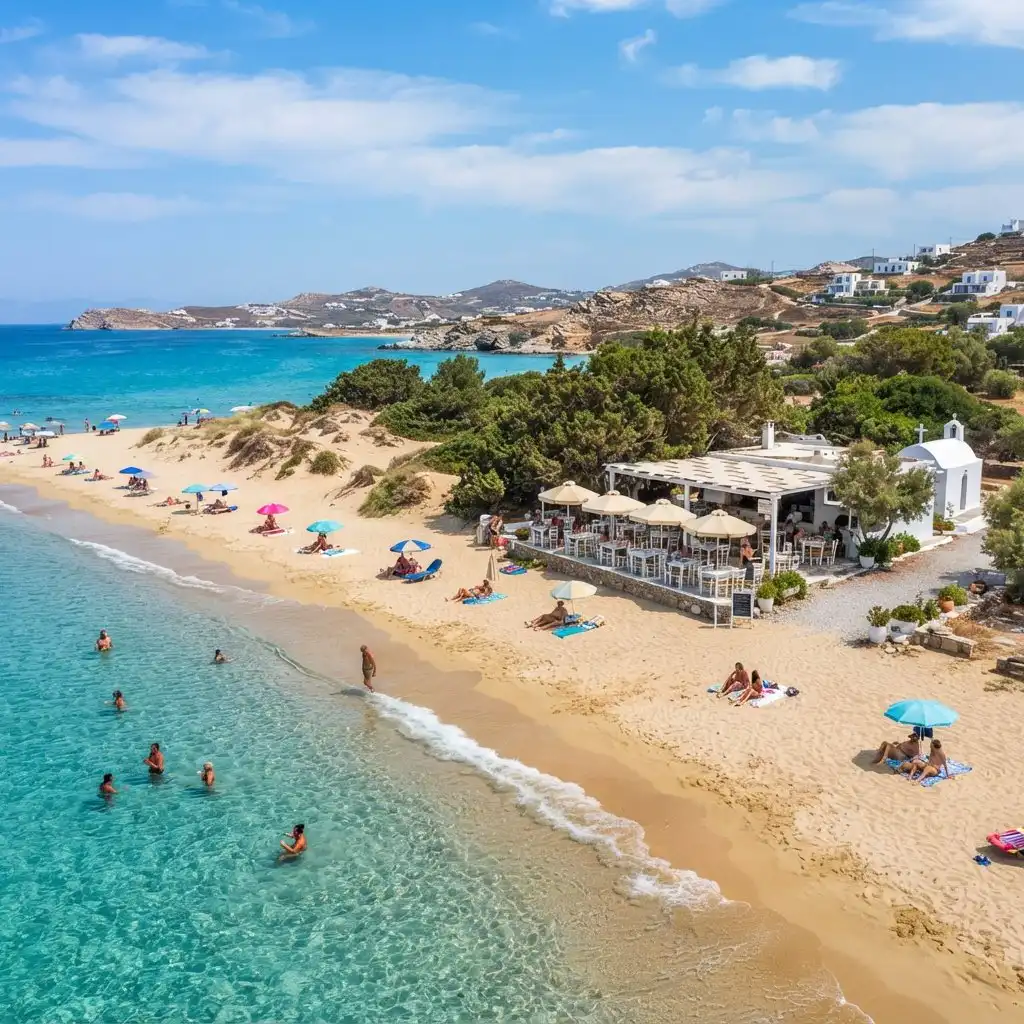

Spanning an area of approximately 435 square kilometres, Naxos stands out as the largest island in the Cyclades group of Greece. Geographical surveys and administrative records outline a territory defined by a striking contrast between fertile agricultural valleys and rugged interior massifs. Mount Zas, the highest peak in the island cluster, reaches an elevation of 1,004 metres. Alongside the Koronos and Fanari massifs, this terrain creates distinct microclimates that feed local streams, allowing vegetation to thrive in ways that set this destination apart from its more arid neighbors. Official geological and geographical studies published by the Greek Ministry of Culture detail how these mountain systems shape the local environment and weather patterns cyclades.culture.gov.gr.
The coastline stretches for roughly 91 kilometres, alternating between sweeping sandy stretches and rocky outcrops. Visitors arriving by sea often notice the sheer scale of the terrain before stepping ashore. For those planning a trip, getting to the island typically involves a voyage across the Aegean Sea. Conventional ferries from the port of Piraeus in Athens take between 5.5 and 6 hours, while high-speed hydrofoil services cut that travel time down to about 3.5 to 4 hours. Alternatively, domestic air travel from Athens connects passengers to the island’s small airport. Official municipal tourism guidelines outline these transport options for travelers mapping out their itineraries www.naxos.gr.
Human settlement on the island dates back thousands of years. Archaeological excavations across the territory reveal continuous habitation from the Neolithic period through the Bronze Age and into the classical eras. The fortified acropolis at Korfari ton Amygdalion, situated near Panormos, dates back to the Early Bronze Age between 2500 and 2300 BC. Investigators who studied the site in the twentieth century uncovered structural foundations that illustrate early urban planning in the Cyclades. These historical layers provide a tangible record of maritime trade, local craftsmanship, and shifting political powers throughout antiquity.
The Monumental Portara and Ancient Ruins
One of the most recognizable landmarks in the Aegean is the Portara, a massive marble doorway that stands on the small islet of Palatia, which connects to the main port via a causeway. Construction on this monumental entrance began around 530 BC as part of a grand temple dedicated to Delian Apollo, commissioned by the tyrant Lygdamis. Although the temple itself was never finished, the surviving doorway remains an engineering marvel. The structure consists of four marble blocks, each measuring roughly six metres in length and weighing approximately 20 tonnes. Official archaeological reports document the complex quarrying and transport techniques required to move such massive stones from inland quarries to the coastal site cyclades.culture.gov.gr..
Beyond the Portara, the region holds several other significant classical and archaic sites. The Sanctuary of Dionysus at Yria, located south of the main town, represents another major archaeological treasure. Excavations here have uncovered a succession of temples built on the same sacred site, dating back to the Mycenaean period. Marble columns and ancient foundations give visitors a clear picture of how local religious practices evolved over centuries. Official documentation from the Greek Ministry of Culture details the architectural evolution of this sanctuary, noting its importance in the worship of the wine god, who, according to local mythology, was raised on the island.
Further inland, near the village of Melanes and the northern coastal settlement of Apollonas, visitors encounter the famous Kouroi of Naxos. These colossal unfinished statues of male youths lie abandoned in ancient marble quarries where sculptors carved them directly out of the bedrock. The Apollonas Kouros, standing over ten metres tall and dating to the early sixth century BC, offers a rare glimpse into archaic stone-working methods. Artisans likely abandoned the massive statues when flaws appeared in the marble or political shifts disrupted their commission, leaving them as permanent fixtures in the terrain for modern travelers to inspect.
Traditional Mountain Villages and Rural Life
While the coastline draws sun-seekers, the interior of Naxos preserves a distinct rhythm of life centered around historic mountain settlements. Villages such as Filoti, Halki, and Apeiranthos sit positioned against the slopes of Mount Zas and the surrounding massifs. Apeiranthos, often called the marble village, features narrow stone-paved alleys, Venetian-style tower houses, and small squares shaded by plane trees. Historically, the economy of Apeiranthos relied heavily on local emery mining, a mineral extracted from the surrounding hills and transported via an old industrial cableway down to the eastern coast at Moutsouna.
Filoti is the largest village in the highlands, stretching out along the base of Mount Zas. Surrounded by olive groves and oak trees, it serves as a central hub for local agriculture and livestock farming. Traditional tavernas in the village square serve local specialties, including Kitron, a citrus-based liqueur distilled from the leaves of the citron tree, and various cheeses produced from goat and sheep milk. The community maintains active agricultural traditions, with local shepherds tending flocks across the rugged mountain slopes much as previous generations have done for centuries.
Halki, located in the fertile Tragea valley, offers a quieter atmosphere filled with neoclassical architecture and historic churches. The village is home to the Vallindras Distillery, which has produced Kitron since 1896. Visitors can tour the old facility to see nineteenth-century copper stills and bottling equipment. The surrounding valley is dotted with Byzantine chapels, such as the Church of Panagia Drosiani, which dates back to the sixth century. This modest stone church contains some of the oldest frescoes in the Balkans, depicting layered cycles of religious art that reflect the diverse cultural influences that swept through the Cyclades throughout the medieval period.
Extensive Coastlines and Diverse Beaches
The island offers an exceptional variety of coastal environments, ranging from sheltered coves to wide stretches of golden sand backed by sand dunes and cedar trees. Agios Prokopios, situated just a few kilometres south of the main port town, regularly ranks among the top beaches in Greece. Its clear turquoise waters and long stretch of fine sand make it a popular spot for swimming and sunbathing. Beachfront tavernas and cafes line the road behind the shore, providing access to local food and refreshments without overwhelming the natural environment.
Moving further south along the western coast, travelers encounter Agia Anna and Plaka beaches. Plaka extends for several kilometres, offering a quieter environment where visitors can find secluded spots even during the peak summer months. The sand dunes behind Plaka are protected natural areas that harbor native flora, creating a buffer between the beach and the inland agricultural fields. Wind conditions along this stretch of coast also make it an ideal location for windsurfing and kitesurfing, particularly around Mikri Vigla, where thermal winds create optimal conditions for water sports enthusiasts.
On the eastern and northern coasts, the terrain changes dramatically. Apollonas offers a sheltered sandy beach framed by traditional whitewashed houses and seafood tavernas, providing a more relaxed atmosphere away from the active western shore. Further south, remote coves near Moutsouna and Panormos provide quiet retreats for travelers exploring the less-frequented parts of the territory. The official municipal tourism portal provides detailed maps and safety guides for visitors traveling through the diverse coastal regions www.naxos.gr.
Agricultural Plenty and Local Gastronomy
Unlike many of its neighbors in the Cyclades, which rely almost entirely on imported goods and tourism, Naxos maintains a strong self-sustaining agricultural sector. Underground water sources and fertile valleys enable the cultivation of potatoes, olives, citrus fruits, and grapes. The Naxian potato has earned a Protected Designation of Origin status, prized across Greece for its distinct flavor and high starch content, which stems from the mineral-rich soil of the central plains.
Livestock farming is another foundation of the local economy. Herds of goats and sheep roam the hills, producing milk that goes into regional cheeses such as Graviera Naxou, Xynotyri, and Mizithra. Graviera Naxou, made from a blend of cow milk and sheep or goat milk, is aged for at least three months, resulting in a firm texture and a rich, slightly sweet taste. Local cooperatives manage cheese production to maintain strict quality standards, supplying markets both on the island and across the Greek mainland.
Vineyards stretch across the hillsides, producing wines that carry on ancient winemaking traditions. Indigenous grape varieties such as Aidani Black, Fokiano, and Monemvasia thrive in the sunny climate and sea breezes. Local winemakers combine traditional methods with current technology to craft crisp whites and strong reds that pair naturally with regional dishes. Dining on the island often features simple preparations of fresh seafood, locally grown vegetables, and roasted meats seasoned with wild herbs gathered from the slopes of Mount Zas.
Historical Architecture and Venetian Heritage
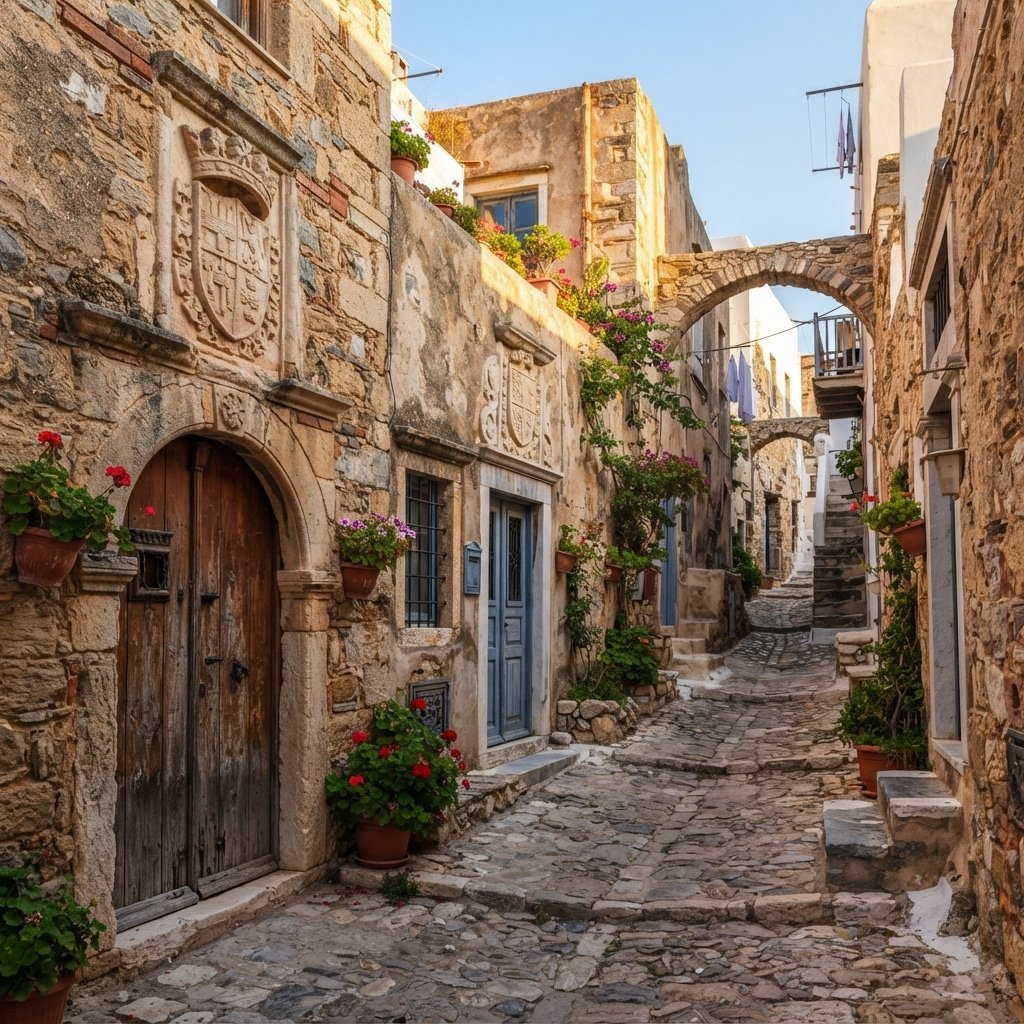
The architectural fabric of Chora, the main town and port, reflects a complex history of foreign rule that followed the Byzantine era. In 1207, the Venetian nobleman Marco Sanudo conquered the island and established the Duchy of the Archipelago. Sanudo built a massive castle, known as the Kastro, on a hill overlooking the harbor. The inner walls of the Kastro enclose medieval townhouses, Catholic churches, and the former Ducal Palace, creating a distinct district that stands in contrast to the whitewashed cubic houses typical of the lower Cycladic settlements.
Families of Venetian nobility lived within the Kastro for centuries, leaving behind coats of arms carved above doorways and narrow arched walkways that remain intact today. The Ursuline School and the Archaeological Museum of Naxos, housed in a former Jesuit school building within the castle walls, hold extensive collections of artifacts spanning from the Late Neolithic period to the Roman era. Official museum catalogs published by the Greek Ministry of Culture detail the provenance of marble figurines, pottery, and metalwork recovered from local burial sites and sanctuaries.
Outside the main town, Venetian towers dot the countryside. These fortified structures served as residences and administrative outposts for feudal lords who controlled local agricultural production. The Bazeos Tower, situated near the village of Sangri, dates back to the seventeenth century and has been restored to host cultural events, art exhibitions, and musical performances during the summer months. These architectural landmarks add a distinct medieval dimension to an island more commonly associated with ancient Greek antiquity and traditional island life.
Outdoor Activities and Maritime Exploration
The varied terrain of the island provides ample opportunities for hiking, cycling, and sailing. A network of ancient footpaths connects mountain villages, agricultural terraces, and coastal bays. One of the most popular hiking routes leads from the village of Danakos up to the summit of Mount Zas. Along the trail, hikers pass the Cave of Zas, a historic cavern featuring stalactites and stalagmites where, according to mythology, the supreme god of Greek pantheon was raised. Reaching the summit rewards climbers with panoramic views across the central Aegean, stretching toward neighboring islands such as Paros, Mykonos, and Amorgos.
Sailing and boating are also popular ways to experience the coastline. Charter boats operate out of the main port and smaller harbors, offering day trips to secluded coves, sea caves, and nearby islets. The sheltered waters between Naxos and Paros provide calm conditions for sailing, while the straits further out test the skills of experienced mariners. Local operators offer guided excursions focusing on marine wildlife spotting, snorkeling in crystal-clear bays, and visiting historic lighthouses perched on rocky headlands.
Birdwatching enthusiasts find diverse habitats across the coastal wetlands and river mouths. Migratory birds stop at marshy areas near the western beaches during their seasonal journeys between Europe and Africa. Conservation groups monitor these fragile ecosystems to protect nesting grounds and maintain the ecological balance of the region. Whether exploring underwater shipwrecks or walking through shaded mountain ravines, travelers discover an environment that supports active outdoor pursuits throughout the spring, summer, and autumn months.
Frequently Asked Questions
What makes Naxos different from other Cycladic islands?
Naxos is distinguished by its large size, high mountains, and abundant water sources, which make it the greenest island in the Cyclades. Unlike drier islands that rely heavily on tourism, it sustains a strong agricultural economy, producing potatoes, olive oil, citrus fruits, and award-winning cheeses.
How do you get to Naxos from Athens?
Travelers can reach the island by taking a conventional ferry from the port of Piraeus, which takes between 5.5 and 6 hours, or a high-speed ferry that takes 3.5 to 4 hours. Direct domestic flights from Athens are also available, taking about one hour.
What is the Portara?
The Portara is the massive marble doorway of an unfinished ancient temple dedicated to Delian Apollo, built in the sixth century BC on the islet of Palatia. It stands roughly six metres high and is constructed from four blocks weighing about 20 tonnes each.
Which mountain is the highest on the island?
Mount Zas is the highest peak in Naxos and the entire Cyclades group, reaching an elevation of 1,004 metres. It features hiking trails leading to the summit and the historic Cave of Zas.
What are some traditional foods to try on Naxos?
Local culinary specialties include Naxian potatoes, Graviera Naxou cheese, Kitron liqueur made from citron tree leaves, roasted meats, and fresh seafood dishes seasoned with wild mountain herbs.
What are the best villages to visit on Naxos?
Key inland settlements include Apeiranthos, known for its marble-paved alleys and tower houses; Filoti, set at the base of Mount Zas; and Halki, located in the fertile Tragea valley. Each village offers traditional tavernas, historic churches, and a glimpse into the island’s enduring rural culture and heritage.
To ensure a smooth trip, travelers can consult the official municipal guide for transport schedules, accommodation options, and local events www.naxos.gr.
. As the largest island in the Cyclades, Naxos balances rich ancient history, active mountain communities, and modern coastal recreation into a memorable Greek destination.